




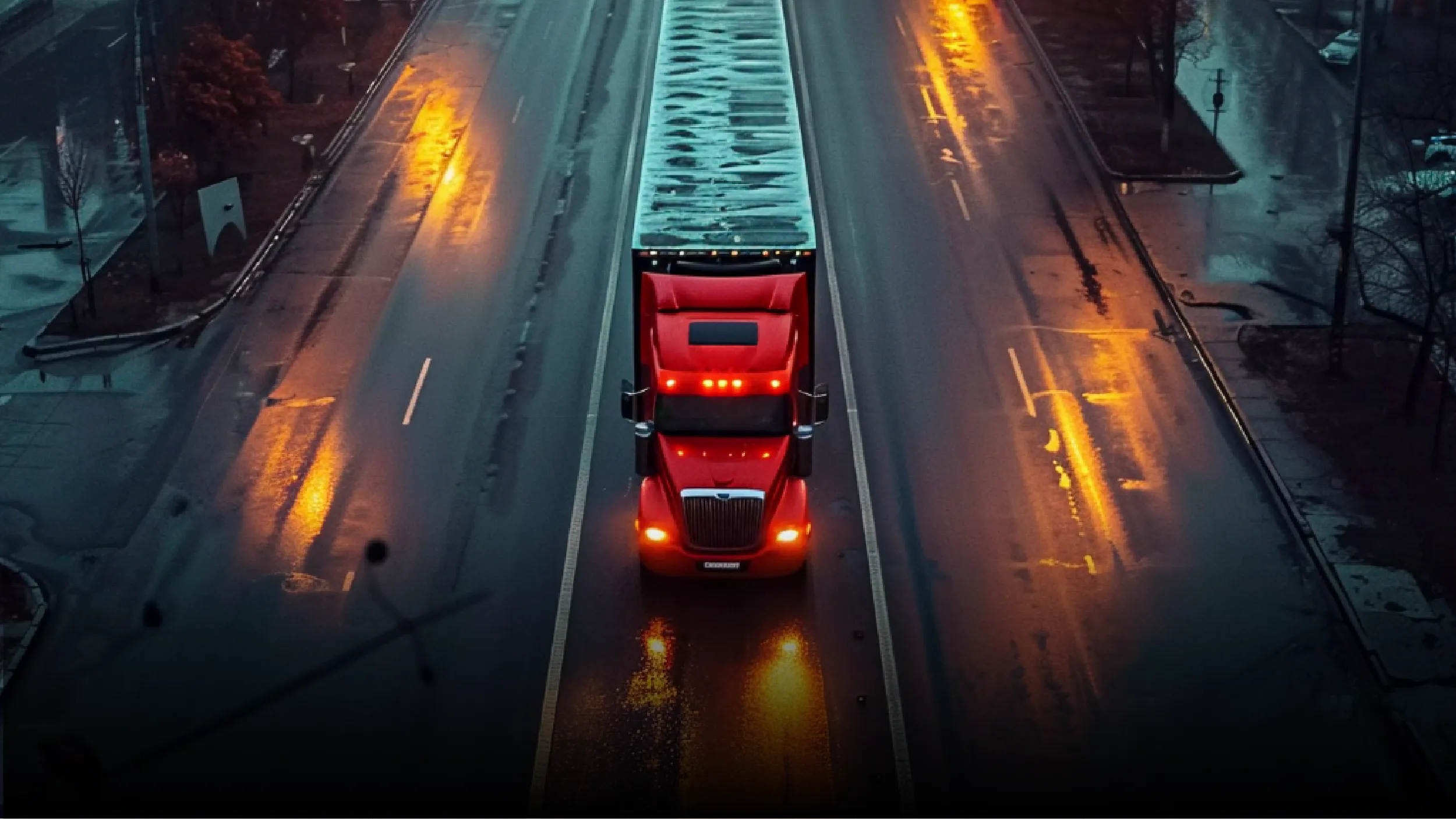
The image of a driverless truck crossing an empty highway still feels like science fiction. The reality is far less dramatic, and far more important. Autonomous freight is not waiting for a distant breakthrough. It is already moving from controlled pilots toward commercial operations on predictable highway routes.
The driverless truck tech future isn’t really about getting a person out of the cab, just overnight. It’s more about changing how freight travels, where human judgment is actually needed, and how often a truck can stay productive without all those long pauses. AI plus LiDAR, computer vision, and autonomous driving systems are getting bundled together so this can happen, in practice and not just in demos. This article walks through how the whole technology works, why hub to hub routes are showing up first, what happens to freight economics, and how the human driver role might shift as autonomous trucking moves toward real scale.
The Technology Powering Autonomous Trucking
A driverless truck is not simply a normal truck with an AI system added to it. The vehicle needs to understand its surroundings, predict what may happen next and control itself safely. That requires several technologies working together.

Cameras and computer vision give a lot of that visual sense, they help the self-driving system ‘notice’ lane markings, road signs, vehicles, obstacles, and other stuff around the truck. Still, cameras alone cannot cover everything it really needs. With LiDAR you get depth plus spatial cues, and radar brings along object detection plus the ability to estimate distance and also motion. Taken together, these sensors give the truck a more expansive look at what’s happening in its surroundings.
The AI system then kind of turns all that info into decisions. It really has to understand what is going on around the vehicle, predict the possible movements, and decide how the truck should respond. so it’s not just about watching, it’s about choosing, braking, steering, changing lanes, or staying on a safe path without waiting for a human driver to make the call.
This is also why autonomous trucking is becoming as much a validation challenge as a technology challenge. In August 2026, ISO began work on the second edition of ISO/WD TS 5083, covering the design, verification and validation of automated driving systems. The work applies to road vehicles including trucks and buses and addresses Level 3 and Level 4 systems, including safety by design, verification, validation, post-deployment activities and cybersecurity.
Torc’s 2026 technology material offers a practical example. Its TorcDrive system is described as a physical-AI virtual driver designed to perceive, reason and navigate in real time. Its AV 3.0 system runs on a production-intent Freightliner Cascadia platform designed for Level 4 autonomy, with long-range 4D LiDAR being integrated into the program.
That matters because the driverless truck technology future depends on more than better AI. The truck has to perceive, decide and act reliably as one system.
The Transition Phase to Hub-to-Hub Commercial Operations
The most important misconception about autonomous trucks is that they will suddenly appear everywhere. That is unlikely.
Dense city streets are messy. Pedestrians behave unpredictably. Construction changes road layouts. Delivery points vary. Drivers encounter unusual situations almost constantly. A long highway corridor is a different problem. The road is more predictable, the route can be mapped and the number of variables is easier to manage.
That is why hub-to-hub operations make so much sense as a transition model. A human driver can manage the difficult parts around a city, terminal or distribution centres. The autonomous truck can then take over for the long highway stretch. At another hub, a human or conventional operation can manage the next complex segment.
The driverless truck technology future is therefore likely to develop through controlled operating environments rather than one giant leap toward fully autonomous logistics.
Also Read: What Are the Biggest Healthcare IoT Device Security Risks and How Can Hospitals Protect Connected Medical Devices?
There is already a commercial example. On May 13, 2026, Volvo Autonomous Solutions and DSV announced the start of autonomous freight operations in Texas. The first commercial truckload was hauled using the Volvo VNL Autonomous between Aurora’s terminals in Dallas and Houston.
That detail is more significant than it may initially appear. The route shows how autonomous freight can be introduced where the operating conditions are repeatable. Companies do not need to solve every possible driving scenario before they can create economic value.
Instead, they can solve a narrower problem first and expand from there.
This also changes the way supply chains may be designed. Transfer hubs could become strategic points where human-driven and autonomous freight networks connect. Over time, those networks could expand as the technology proves itself across more routes and operating conditions.
The driverless truck technology future is consequently less about eliminating the driver from every kilometer and more about deciding which kilometers genuinely require a human.
How Autonomous Trucks Will Transform Freight Economics
The business case for autonomous trucking goes beyond labour savings. That argument is too narrow.
The bigger opportunity is asset utilization. A truck is an expensive physical asset, yet traditional freight operations are shaped by human availability, working hours and rest requirements. Autonomous systems can change that operating equation because the vehicle does not need to stop simply because a human driver needs to sleep.
That does not mean every route will suddenly become twice as fast. Traffic, weather, loading, refueling, maintenance and regulatory requirements will still matter. The smarter argument is that autonomous trucks could keep moving through more of the available operating window.
That could have a direct effect on freight networks. If a truck can spend more time moving instead of waiting for a driver-related break, companies may be able to move freight with fewer idle periods. However, the real financial impact will depend on how fleets, terminals and routes are redesigned around autonomous operation.
Fuel efficiency is another potential advantage. An AI driving system can maintain consistent acceleration and braking instead of reacting like a human driver to every small change. Autonomous fleets could also support more coordinated vehicle movements and, where practical, aerodynamic platooning.
The scale of actual operations already gives this argument some weight. Kodiak reported more than 40,000 cumulative hours of paid driverless operations through Q2 2026. The company also reported that its autonomous operations delivered more than 300,000 tons of freight during Q2 2026.
Those numbers matter because they move the discussion away from laboratory demonstrations. The question is no longer only whether a truck can drive itself. It is whether autonomous trucks can become productive freight assets.
That is the real economic test for the driverless truck technology future. A truck that drives itself but does not fit efficiently into a supply chain is not a breakthrough. It is an expensive experiment.
The winners will be the operators that redesign routers, hubs, fleet management and freight scheduling around the technology.
What Does Driverless Tech Mean for Human Drivers and Highway Safety?
The human side of autonomous trucking is where the conversation usually becomes simplistic. One side predicts mass unemployment. The other suggests nothing important will change. Both positions miss the more complicated reality.
The trucking job is not one task. It is a bundle of tasks. Some involve long stretches of highway driving. Others involve loading, terminal movements, customer interaction, exception handling and navigating complicated local environments.
As autonomous systems get better at the long-haul side of things, the human role can kind of drift toward where judgment and physical presence still count, you know. That might translate into local delivery, first and last mile work, fleet oversight, remote assistance and a bunch of technical roles orbiting autonomous systems.
The numbers also suggest that utilization will become a major part of the conversation. Aurora reported in Q1 2026 that its driverless trucks operating for Werner were averaging more than 4,000 miles per week, equivalent to an annual run rate above 225,000 miles per truck.
That changes the question we should ask about driverless trucking. Instead of asking only how many drivers a company can remove, it makes more sense to ask how freight operations change when trucks can handle long highway segments without a person behind the wheel.
Safety is equally important. Removing a human from a long-haul route does not automatically make the vehicle safe. Autonomous systems still have to identify hazards, respond correctly to unusual situations and operate within their designed conditions. That is why validation matters so much.
At the same time, fatigue is one of the realities of long-distance driving. A system that can reliably handle repetitive highway driving could remove some of that human burden. But the technology must earn that responsibility through testing and operational evidence.
The driverless truck technology future will therefore not be defined by a simple human-versus-machine contest. It will be defined by how effectively the two can be separated across the parts of freight operations where each is strongest.
That is a far more realistic picture of the transition.
The Future of Supply Chain Logistics
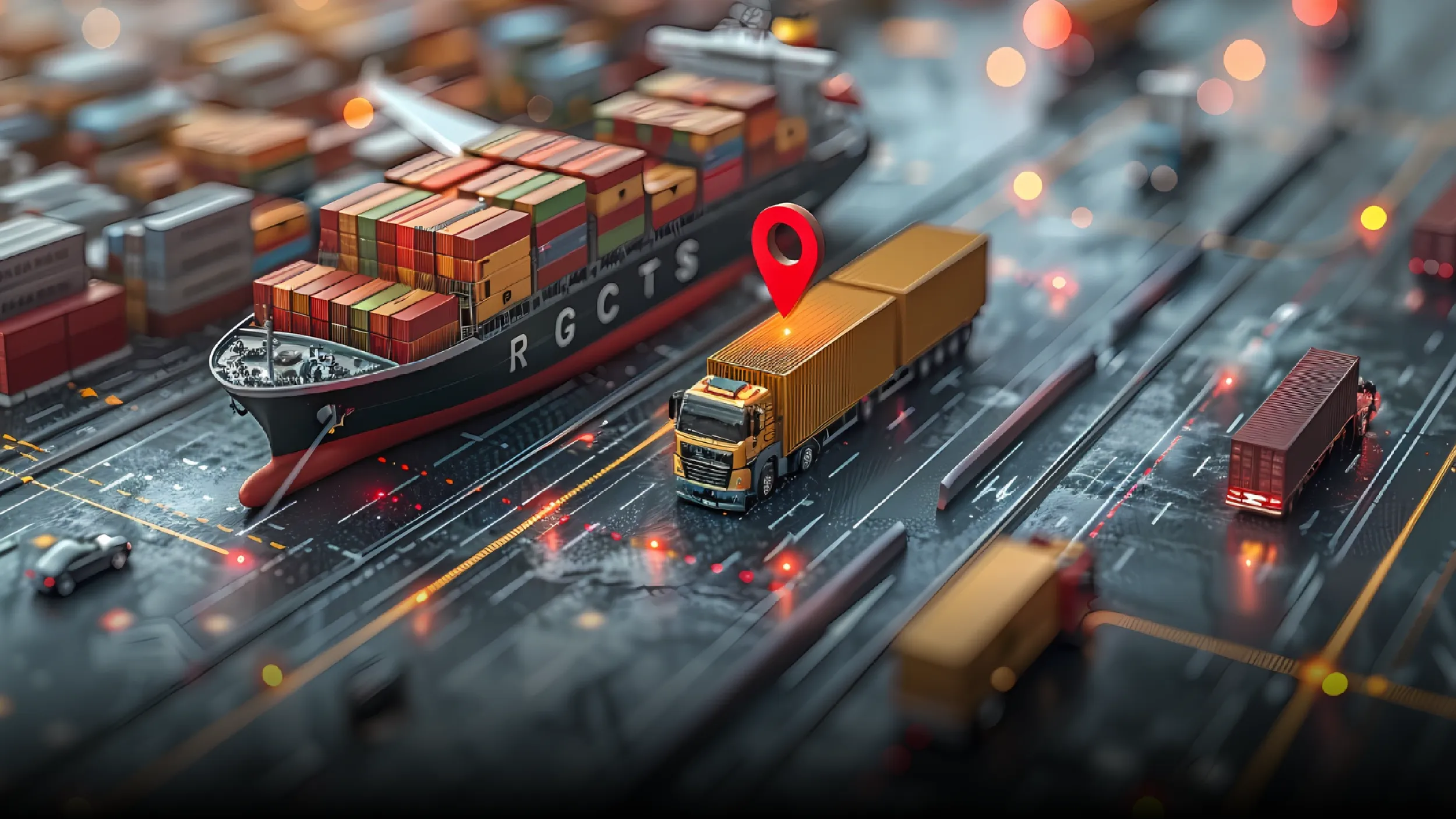
The future of autonomous trucking will not be decided by who builds the flashiest self-driving system. It will be decided by who can make the technology work reliably inside a real freight network.
That means regulation, state-by-state approvals, safety validation and public trust still matter enormously. A truck that performs well on a controlled highway is only one piece of the puzzle. The harder challenge is connecting that capability to terminals, local roads, customers and the rest of the supply chain.
The driverless truck technology future is therefore likely to arrive in stages. Hub-to-hub freight will come before truly universal autonomy. Human roles will change before they disappear. And economic value will depend on redesigning the network around autonomous assets.
The real breakthrough will not be when a truck drives itself. It will be when the entire logistics system is designed to take advantage of it.