



For years, warehouse automation kind of ran on this pretty simple rule. You make a process, lock it in, and then you make sure everything takes the same route every single day. It worked when supply chains were predictable. but they aren’t anymore, not like before.
Now, warehouses are dealing with demand that goes up and down, delivery timelines that keep getting faster, labor shortages that are hard to solve and product catalogs that change all the time. It’s kind of like, everything moves at once, and it’s rarely calm. That older automation setup was built for stability. Modern ops don’t really get to stay still. they need flexibility, even when things get messy.
This is where autonomous mobile robots have started to shift the conversation, quietly at first, then pretty loudly.

Autonomous Mobile Robots (AMRs) are self-navigating robots that use sensors, AI, computer vision, and mapping tech to move through the warehouse space without depending on fixed paths or physical guides. They can sense what’s around them, decide in real time, and adjust their movement when conditions change.
And the shift is happening at scale. The global market value of industrial robot installations hit US$16.7 billion in 2026. That figure alone tells a bigger story. Automation is no longer some optional “nice-to-have” investment. In a lot of warehouses and factories it’s turning into a requirement for staying competitive.
Automated Guided Vehicles (AGVs) vs. Autonomous Mobile Robots (AMRs)
A lot of people still use AGVs and AMRs as if they are interchangeable. They are not.
An Automated Guided Vehicle follows instructions. An Autonomous Mobile Robot makes decisions.
That sounds like a small difference. In reality, it changes everything.
AGVs depend on predefined routes. Those routes are usually created using wires, magnetic strips, markers, or other physical infrastructure. Once the route is established, the vehicle follows it.
The problem appears when the environment changes.
A blocked aisle, a misplaced pallet, a bit of temporary inventory storage, or that extra traffic can throw things off, because AGVs are built for predictability.
Per ISO, a mobile robot goes around under its own control, while an AGV keeps to a predetermined route so it doesn’t really have full autonomy.
That little distinction is also why autonomous mobile robots are getting more momentum in warehouses and in manufacturing facilities.
Instead of waiting around for instructions, AMRs keep assessing their surroundings, pretty much nonstop. They identify obstacles, calculate alternatives, and choose the most efficient route available. At the same time, they do not require expensive floor modifications whenever workflows change.
Supply chains have become dynamic. Naturally, the machines supporting them are becoming dynamic too.
The Anatomy of Autonomy Through Sensors, SLAM, and Edge AI
The interesting thing about autonomous mobile robots is that there is no single technology responsible for their intelligence.
The robot is only as good as the systems working behind it.
Perception and Multimodal Sensor Fusion
Before a robot can make some kind of choice, it has to figure out what is going on around it, like in real life, not just from one angle.
Most AMRs end up using a mix of 3D LiDAR, RGB-D depth cameras, IMUs and ultrasonic sensors, so it is not only one source.
Think about how people move through a jammed room. We lean on our eyes, our hearing, our balance senses, and that general spatial awareness, all together at once not separately. Robots do something similar through sensor fusion.
LiDAR maps the environment. Cameras identify objects. IMUs monitor movement and orientation. Ultrasonic sensors help detect nearby obstacles.
Individually, every sensor has limitations. Combined, they create a much more accurate picture of reality.
That layered awareness allows autonomous mobile robots to move safely through busy warehouses where forklifts, workers, carts, and inventory are constantly moving.
Next-Generation SLAM
One of the most important technologies behind AMRs is SLAM, or Simultaneous Localization and Mapping.
The idea is simple, but it sorts of feels bigger once you see it.
The robot needs to know where it is, while at the same time it figures out what is happening around it in the environment.
Instead of just depending on a fixed map forever, AMRs keep updating their view of the facility, like constantly refreshing the picture. If shelving changes, or a temporary obstacle shows up, the robot adapts and reroutes without much drama.
That kind of flexibility is also one of the major reasons why warehouse automation is moving toward AMRs rather than those rigid navigation systems, that basically stay “the same” until someone remaps everything.
Intelligent Path Planning and Predictive AI
Finding a route is not difficult.
Finding the best route while dozens of moving things are around you, it’s way harder than it sounds.
Modern autonomous mobile robots rely on path-planning approaches like A* and D* Lite to figure out efficient routes. But, more and more, they also bring in predictive AI.
So it’s not just that the robot reacts to what it sees, in the moment.
Instead, it tries to foresee what could happen next, even if nothing obvious is happening yet.
For example, if a forklift is coming up to an intersection, or a worker is moving into a picking zone, the robot can adapt its motion before congestion kicks in. In practice this usually means smoother operations and less frequent interruptions.
Edge Computing and Cloud Coordination
A warehouse robot cannot afford delays when making navigation decisions.
Critical processing happens locally on the robot through edge computing. That keeps response times fast.
Meanwhile fleet level insights get passed through cloud systems, where performance data, utilization metrics, and operational trends can be worked through and understood.
NVIDIA talks about a cloud to robot workflow that ties simulation, robot learning, and edge computing together, for AI robots so they can adapt and run smoother in the field.
That idea captures where the industry is heading. The future is not about smarter robots alone. It is about smarter fleets.
AMRs in Action Across Supply Chains and Production Floors
Technology becomes meaningful when it solves real problems. This is where autonomous mobile robots start proving their value.
Warehouse Logistics and Hyper-Fulfillment
A lot of warehouse inefficiencies seem to stem from movement, not from anything fancy. You know, workers spend a surprising amount of time just walking back and forth between locations, pulling items, topping up inventory, and dealing with returns too. It’s kind of understated but that kind of “going around” adds up fast.
AMRs reduce that wasted motion.
Instead of workers searching around for inventory, the inventory kind of comes to workers. It turns out person-to-goods picking has become a big use case, because it cuts down travel time and boosts throughput.
Autonomous replenishment is also growing. In plain terms products get moved to where they are needed without hanging around for someone’s manual intervention. Returns processing tends to get quicker too, because robots can carry items through inspection and restocking steps automatically
At this point the business impact is getting hard to ignore.
Supply-chain AI adopters have already seen up to 15% logistics cost reductions, and around 25% shorter lead times.
Those figures help explain why warehouse robotics has gone from small pilot projects to big scale deployments.
Industry 4.0 and Manufacturing Agility
Manufacturing is experiencing a similar shift.
Factories today need flexibility. Production schedules change more frequently, product customization continues to grow, and disruptions can appear without warning.
Traditional fixed automation struggles in that environment.
Autonomous mobile robots help manufacturers move raw materials, components, and finished products across production floors without relying on rigid infrastructure.
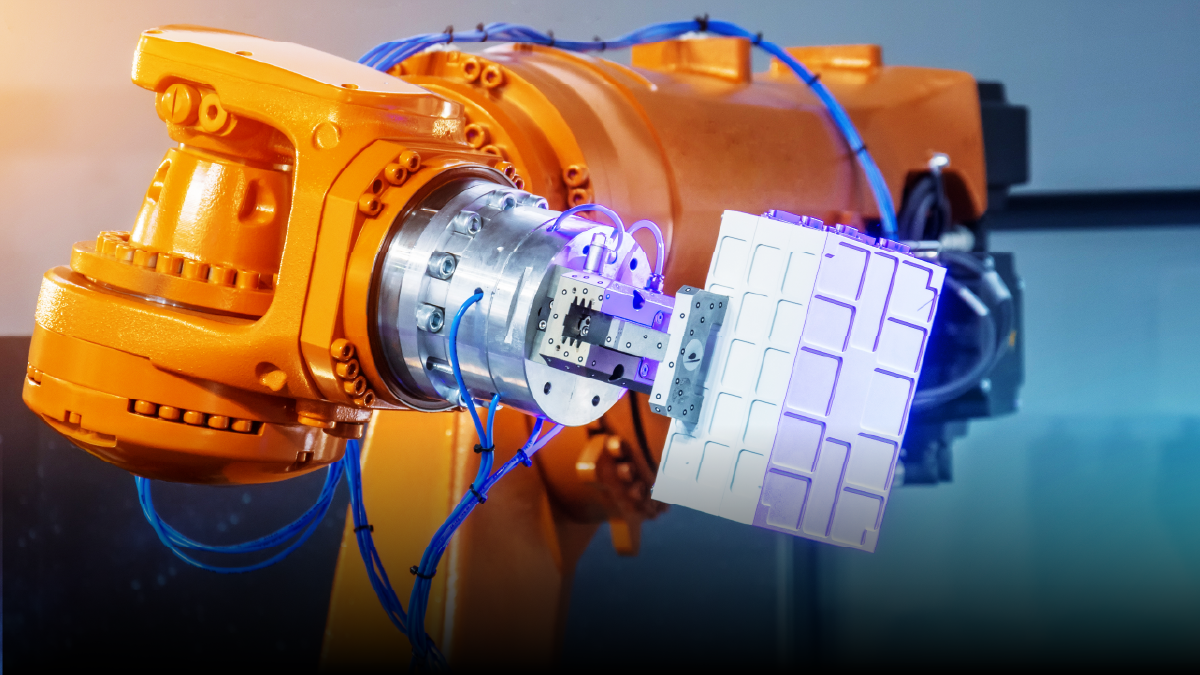
A particularly interesting development is the rise of mobile manipulators.
These systems combine AMRs with robotic arms or flexible conveyor tops. As a result, a single machine can move through a facility and perform handling tasks when needed.
The outcome is a production environment that can adapt faster without requiring major physical changes every time workflows evolve.
Key Enterprise Considerations for AMR Deployment
Buying robots is the easy part.
Making them work inside an existing operation is where the real challenge begins.
Software interoperability matters first. AMRs need to communicate with Warehouse Management Systems, ERP platforms, and other operational software. If those systems cannot exchange information properly, efficiency gains disappear quickly.
Fleet orchestration becomes important as deployments grow. Managing ten robots is manageable. Managing hundreds requires coordination. Robots need to share information, avoid traffic congestion, balance workloads, and communicate through Wi-Fi or 5G networks to keep operations flowing smoothly.
Cybersecurity cannot be ignored either. Every connected robot collects data and interacts with enterprise systems. Organizations need strong security practices because these machines continuously process information from the physical environment around them.
The Autonomy-First Supply Chain
The biggest mistake companies can make is viewing autonomous mobile robots as another piece of warehouse equipment.
That thinking belongs to an earlier phase of automation.
The real shift happening in 2026 is the move from task automation to operational intelligence, and yeah it sounds similar at first but it really isn’t. Warehouses and factories are turning into connected ecosystems now where software, data, AI, and robotics kind of work together in a continuous loop.
The direction is already clear. The share of industrial manufacturers expecting to highly automate key processes by 2030 will climb from 18% to 50%.
That part isn’t a pure technology trend. It’s a business trend, plain and simple.
If a company treats autonomous mobile robots as strategic infrastructure then it will likely accelerate, adapt faster, and run more efficiently over time. But if they keep viewing automation with a fixed, step by step process mindset they might end up competing against systems that learn, tune themselves, and improve every single day.