

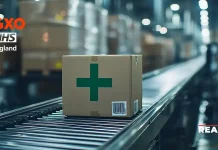


The increase in the collaboration of GXO Logistics with NHS England has been announced, which is a significant development in the modernization of the operations of healthcare supply chains in the UK.
The partnership aims to achieve more efficient logistic operations, better inventory management, and timely delivery of vital medical supplies to different healthcare facilities of the NHS. It is a clear indication of the fact that advanced solutions in logistics have become vital components of the healthcare system not only for improving the efficiency of such operations but also for improving patient health.
Moreover, as a part of the expanded collaboration, GXO Logistics will continue to oversee and further refine the central logistics operations of NHS England, such as warehousing, distribution, and inventory management. It will use its expertise in the use of the latest technology to achieve better results through the automation of operations, data analytics of the supply chain, and digitalization.

The initiative is designed to:
Improve supply chain transparency across health networks
Reduce lead times for critical medical supplies
Improve inventory accuracy and forecasting
Increase resilience against disruptions
Modernizing NHS England’s logistics systems can help guarantee access to vital supplies – from medicines to medical equipment – in hospitals and across the NHS as a whole.
The Increasing Role of Logistics in the Field of Healthcare
The healthcare system is becoming more dependent on efficient logistics operations in managing intricate supply chains. This is more significant in pandemic conditions. It is also significant in the general provision of healthcare services.
The partnership between GXO and the NHS is significant in understanding the role of logistics companies in becoming key players for the healthcare system, not merely service providers. In fact, the healthcare system can concentrate on the provision of services by depending on the efficiency of the logistics operations.
Impact on Healthcare and Logistics Industry
The alliance will deeply impact Healthcare and Logistics industries that are merging closely in various ways.
1. Digital Transformation of Healthcare Supply Chains
Healthcare providers are equipping themselves with digital resources including real-time tracking, predictive analytics, and automation to enhance their operations and cut down on costs.
2. Increased Focus on Resilience
This global disruption has revealed the dependency on supply chains with the ability to adapt and sustain the delivery of care.
Also Read: GSME and Tarana Wireless Partners to Advance Wireless Connectivity
3. Integration of Data and Analytics
Access to real-time data enables healthcare and logistics supply chains to improve forecasting, inventory control, and decision-making.
4. Expansion of Outsourced Logistics Services
Healthcare companies in need of managing complex supply chain operations with limited resources increasingly turn to third-party logistics providers and other vendors.
Business Implications for Industry Players
The partnership between GXO and NHS, having deepened, will most likely be a source of fresh business openings and difficulties to the current healthcare and logistics operatives.
Business that deal with logistics in the healthcare sector, including the handling of cold chains and conformity to regulations, will be the ones that will mostly be pushed to work harder.
Businesses must be ready to spend on the latest technology including robotics, AI, and IoT if they want to be a part of the modern logistics world.
Supply chain changes have the potential of reducing costs while at the same time improving the level of service for the benefit of both healthcare facilities and logistics firms.
Those organizations that are able to provide dependable, fast, and open logistics services will win in the market.
Enhancing Patient Outcomes Through Logistics
A key element of this collaboration is its capability to uplift the quality of patient care. Good logistics is the key that unlocks the availability of medical equipment and pharmaceuticals at the right time and place, which potentially minimizes waiting and raises the level of effectiveness in treatments. As an illustration:
– Prompt dispatch of life-saving drugs has the potential to rescue patients from death – Efficient control of stock decreases the occurrences of both scarcity and surplus
– Increased transparency of the supply chain aids in making better decisions This is an instance of how logistics really underpin the gamut of healthcare delivery and patient well-being.
Healthcare logistics, albeit beneficial, is not without its distinctive set of issues, such as: – Complicated regulatory legislation
– Considerable fluctuations in demand – Necessity for storage conditions that are temperature controlled
– Exposure to supply chain interruptions The collaboration between GXO and NHS is a great example of how these challenges can be met by using the most modern technologies and know-how to build a stronger and more flexible system.
The Future of Healthcare Logistics
This is a trend towards more integrated and technology-enabled supply chains in healthcare. As the industry evolves, logistics will become more and more critical in achieving efficient and reliable operations.
The future may hold:
Increased use of AI and machine learning in analytics
Continued investment in automation and robotics in warehouses
Development of digital platforms for real-time supply chain transparency
Conclusion
The partnership between GXO and NHS England is a major milestone in the revolutionization of the way in which the logistics of healthcare are carried out. The partnership is a major milestone in the revolutionization of the healthcare industry by bringing together the latest technology in the logistics of healthcare to revolutionize the healthcare industry for greater efficiency, resilience, and focus on patients.
The biggest lesson learned for the Healthcare and Logistics industries is that the way forward is to embrace new technologies, work together, and go digital. The companies that are willing to embrace these challenges will see that they are more prepared to adapt to the changing needs of the industry and provide value to the growing complex world we live in.