


The world automotive, freight logistics, and heavy-duty transport ecosystem is now facing one of the largest structural transformations that consist in the transition of human-driven trucking fleet into self-driving and electric freight systems. While trying to reduce costs, ensure road safety, and adhere to severe carbon emissions regulations, commercial transport industry faces several crucial operational challenges: lack of drivers, rising cost of fuel, and complicated verification of autonomous driving.
Up to now, freight transport was almost exclusively based on diesel-fueled long-haul trucks piloted by human drivers.
However, long-haul trucks have faced severe global labor crisis when there are projected to be hundreds of thousands of empty driver positions around the world.

In addition, driving heavy trucks in a mixture of highway traffic and logistically complex terminals poses significant challenges for both safety and computational processing.
While traditional rule-based software for autonomous driving fails to process complicated edge cases, such as sudden closure of lanes, changing weather, and high port density, in real time.
Thus, in order to deal with operational challenges and implement safe driverless fleet of trucks, automotive and logistics industries need powerful AI models and high-performance computers capable of physical reasoning and real-time fleet simulation.
Addressing this heavy transportation challenge, Swedish freight mobility pioneer Einride announced that it is deepening its strategic collaboration with AI computing leader NVIDIA Corporation.
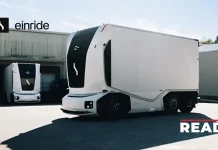
Under the expanded partnership, Einride is adopting NVIDIA Alpamayo-NVIDIA’s specialized physical AI foundation model and autonomous vehicle development framework-to power its next-generation cabless Einride Autonomous Pods and electric freight fleets worldwide.
End-to-End Physical AI for Heavy-Duty Autonomous Freight
The expanded collaboration between Einride and NVIDIA integrates cutting-edge physical AI architectures directly into Einride’s freight mobility ecosystem. By combining Einride’s autonomous Pod design and Einride Saga digital operating system with NVIDIA Alpamayo’s physical reasoning engines, the alliance enables autonomous freight trucks to navigate complex logistics routes with extreme reliability.
Key technical and operational pillars of the announcement include:
Integration of NVIDIA Alpamayo Physical AI: Introduces NVIDIA’s state-of-the-art physical AI capabilities directly within Einride’s self-driving software stack, enhancing decision-making capabilities and route planning on varied types of roads.
Virtual Simulation Using NVIDIA Omniverse: Leverages physical digital twins created using NVIDIA Omniverse for virtual simulation of a million-plus edge cases in the physical world before rolling out autonomous Pods on public roads.
Also Read: Synaptics Launches Coralboard Edge AI Development Board Powered by Google Coral NPU Technology on DigiKey
High Level Integration With Einride Saga OS: Integrates the Alpamayo-based self-driving AI technology directly into Einride Saga for providing shippers with real-time tracking and automated charging of freight.
“Scaling autonomous freight requires moving beyond simple rule-based software to intelligent physical AI models capable of reasoning in real-time,” stated executive leadership at Einride.
Impact on the Automotive Industry
The deepened collaboration between Einride and NVIDIA highlights major developments across the broader Automotive landscape:
1. Shifting from Traditional Commercial Hardware to Software-Defined Freight
For over a century, commercial truck manufacturers competed primarily on engine horsepower and chassis durability. Einride’s adoption of NVIDIA Alpamayo formalizes the commercial automotive shift toward Software-Defined Heavy Transportation. Modern fleet operators prioritize onboard AI compute, sensor suites, and physical AI models over traditional mechanical specifications.
2. Establishing Physical AI and Digital Twin Simulation as Automotive Benchmarks
Validating autonomous heavy trucks on public roads requires billions of testing miles. Coupling Einride’s autonomous vehicles with NVIDIA’s Alpamayo model and Omniverse simulation platform proves that Physical AI and Virtual Testing Are Mandatory for AV Commercialization. Simulating complex weather and traffic scenarios in virtual environments ensures safety compliance before vehicles hit production routes.
Overall Effects on Businesses Operating in the Sector
Commercial fleet owners, OEMs, logistics service providers, and supply chain managers gain strategic benefits from the Einride-NVIDIA alliance in terms of:
Decreasing Total Cost of Ownership (TCO): The shift from manned diesel trucks to autonomous, electric Pods decreases TCO through reduced manpower costs and savings in fuel expenses.
Removing Supply Chain Obstacles: An autonomous fleet runs round-the-clock operations without being hampered by driver fatigue, resulting in increased speed in deliveries along regional supply chains.
Compliance with ESG and Decarbonization Goals: The combination of electric propulsion systems and optimal autonomous drive routes results in minimized carbon footprint.
Conclusion
Einride’s expanded strategic collaboration with NVIDIA to adopt the NVIDIA Alpamayo platform represents a pivotal milestone in the evolution of commercial automotive engineering, autonomous logistics, and physical AI. By pairing Einride’s purpose-built autonomous electric Pods with NVIDIA’s physical computing architecture, these two technology pioneers deliver a practical blueprint for the future of global freight. For the broader automotive industry, this news confirms that building sustainable, high-efficiency logistics networks relies on fast, intelligent, and simulation-validated autonomous platforms.