



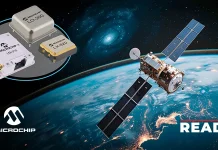

The global space sector is executing a major structural evolution. For decades, deploying scientific satellites or environmental monitoring instruments into Earth’s orbit meant packing payloads into massive, multi-ton rideshare missions managed by heavy-lift rocket platforms. While ridesharing significantly lowers the baseline launch cost per kilogram, it forces small-to-medium satellite builders to absorb intense operational compromises. Payload developers must defer to the primary payload’s launch date, adapt to generic orbit destination profiles, and navigate prolonged integration timelines.
When it comes to high-consequence Earth system sciences-such as mapping fast-moving solar radiation or tracking atmospheric ice-cloud formations-these orbital compromises are completely unviable. Time-sensitive climate research demands bespoke orbital parameters, specific inclinations, and rapid deployment schedules that heavy rideshare operators cannot guarantee.
To achieve this level of precision, national space programs are pivoting to dedicated small-launch configurations. This operational shift was highlighted, when NASA officially selected Rocket Lab Corporation to provide three dedicated Electron launches for two distinct, high-priority scientific operations: the PolSIR and TSIS-2 missions.

By utilizing Rocket Lab’s small launch vehicle to bypass rideshare bottlenecks, the space agency is demonstrating a repeatable, agile roadmap for deploying dedicated, time-sensitive climate infrastructure.
Delivering On-Demand Orbit Insertion
The three-launch agreement centers on Rocket Lab’s signature Electron rocket—the world’s most frequently flown small orbital vehicle. Operating out of the company’s private, high-frequency Launch Complex 1 in Mahia, New Zealand, the missions are scheduled to roll out in rapid succession across early 2027.
The split payload layout targets specific atmospheric and solar boundaries:
The PolSIR Mission (Polarized Submillimeter Ice-cloud Radiometer): Rocket Lab will launch two back-to-back flights of the Electron vehicle to deliver two identically equipped CubeSats into distinct, 52-degree inclination, non-sun synchronous orbits. This rapid launch procedure will permit the pair of satellites to traverse the tropics and subtropics during different parts of the day to obtain time-based measurements on the variation of ice clouds for better weather prediction models.
The TSIS-2 Mission (Total and Spectral Solar Irradiance Sensor-2): In this mission, Rocket Lab will deliver a single highly specialized satellite on board an Electron rocket to measure highly precise readings of the total energy radiated by the Sun in Earth’s upper atmosphere. The measurements cover the ultraviolet, visible, and infrared spectrums of light and give scientists all the data required to assess the recovery of the ozone layer and build air quality models.
Rapid Procurement Timelines: Underlining the capabilities of current small-launch contracts, NASA has scheduled the TSIS-2 mission within just seven months after contract signature, enabling the agency to use narrow scientific windows not available through long, multistage traditional heavy procurement processes.
Also Read: Coretura Announce Partnership with Accenture to Unify the Heavy Commercial Vehicle Codebase
Impact on the Aerospace Industry
The three-flight contract awarded by NASA signals a major evolutionary step for the broader Aerospace sector, altering the balance between launch capacity and mission architecture:
1. The Institutional Validation of Dedicated Small Launch
Historically, critics argued that dedicated small launch vehicles were an expensive, niche luxury destined to be squeezed out by massive, ultra-low-cost commercial rideshare heavy clusters. This NASA selection directly refutes that thesis.
By purchasing three separate small vehicles instead of splitting a single heavy-lift fairing, NASA confirms that Bespoke Orbit Optimization is a core operational requirement for modern earth science. The contract proves that for high-precision scientific models, gaining absolute control over exact orbital mechanics and rapid launch windows outweighs basic, per-kilogram heavy rideshare savings.
2. Scaling Production Efficiency to Achieve Launch Availability
A primary hurdle holding back the small-satellite ecosystem has been the persistent lack of launcher reliability and predictable launch cadences.
Rocket Lab’s ability to maintain a streamlined production line-currently manufacturing an active Electron rocket every 11 days-changes the market dynamic. Bringing mass-production assembly tools to the aerospace foundry allows launch providers to function as predictable transit utilities, giving government space programs and commercial consortiums the scheduling security needed to deploy complex satellite fleets.
Overall Effects on Businesses Operating in the Sector
For commercial satellite manufacturers, Earth observation startups, and component subsystems suppliers navigating this high-frequency space economy, the development introduces clear strategic opportunities:
Lowering Capital Expenditure Barriers for Fleet Designers: Developing specialized space instruments carries immense financial risk due to prolonged launch integration cycles. Rocket Lab‘s proven track record across more than 90 launches provides satellite developers with high visibility, helping down-stream technology startups validate their hardware quickly and protect corporate research and development budgets.
Accelerating Commercial Space-SaaS Models: In the highly competitive geospatial intelligence market, downstream revenue models rely on real-time data collection. Shifting away from massive, heavy satellites toward agile, dedicated small-satellite networks allows space companies to deliver localized analytics-such as precision agricultural tracking or emissions monitoring-to corporate enterprise clients far faster.
Future-Proofing Space Technology Lifecycles: Relying on legacy, slow-moving launch manifest systems can cause complex instruments to sit in cleanrooms for years, risking technological obsolescence before they ever reach space. Embracing a seven-month contracting-to-launch pipeline allows independent payload designers to build rapid hardware development loops, continuously updating their sensor nodes to match current technological benchmarks.
Conclusion
“Electron has become synonymous with reliability, precise orbital accuracy, and on-demand launch capability,” stated Sir Peter Beck, founder and CEO of Rocket Lab. The multi-mission NASA commitment is a definitive reminder that scaling the next generation of global environmental management requires moving past the limits of legacy rideshare structures. By pairing the rapid contracting pipelines and precision orbit insertion of Rocket Lab’s Electron vehicle with NASA’s frontier earth observation instruments, these pioneers are providing the foundational blueprints needed to map global climate cycles accurately. For the aerospace sector, this rollout delivers a clear principle for the road ahead: long-term market leadership belongs to open, highly responsive, and vertically integrated systems—powering exploration on a foundation of operational flexibility and absolute structural trust.