



Manufacturing used to be predictable. You set up a line, you run it harder, you cut costs, and you win on volume. That was the logic. Simple and effective for a long time.
Then things started slipping. Customers stopped behaving the same way. Demand became messy. The trend shows an increase during one month which is followed by a decrease in the following month. People want options which they can receive quickly and which will not resemble products from other brands.
So the system had to respond.

The current situation does not represent an abrupt revolutionary change. The current situation presents a transformation which has developed over an extended period. Mass production has started to decline while mass personalization takes its place. Not perfect, not fully there, but clearly moving in that direction.
Advanced manufacturing uses AI and automation and connected systems and data technologies to improve production efficiency. The system enables factories to respond more quickly because it provides them with operational flexibility and prevents any operational limitations. It allows the manufacturers to transform from rigid to flexible manufacturing practices.
This shift is tied to Industry 4.0. And 2026 feels different. Not because the tech is new, but because companies have stopped treating it like an experiment. They are putting it into real operations and expecting results.
The 3 Pillars of Modern Production
A lot of people still think this is about better machines. Faster ones, smarter ones, more automated ones.
That’s only part of the story.
The bigger shift is in how everything connects and works together. Systems are becoming more important than individual machines.
Start with efficient production. Earlier, efficiency meant pushing the line harder. Now it starts much earlier. Companies are spending more time in design, simulation, and testing. They build prototypes quickly, break them, fix them, and only then move to production. That changes the whole flow. Less waste, fewer surprises, and faster turnaround. It also makes customization easier to handle.
Then comes intelligent production. This is where traditional setups feel the pressure. Factories are no longer just executing instructions. They are evaluating situations before acting. Digital twins, AI systems, connected data streams. All of this helps simulate outcomes before anything physical happens. It reduces guesswork.
But here’s the part that actually matters. Companies are redesigning workflows to extract value from AI, not just deploying tools. That sounds small, but it isn’t. Installing AI is easy. Changing how decisions are made inside a company is where the real work is.
Now look at organization. Even if the factory is smart, a rigid structure around it will slow everything down. That’s why companies are moving toward flexible supply chains and smaller production setups. Micro-factories are coming up because they reduce dependency on one big system.
At the same time, something else is happening quietly. Manufacturers are not just selling products anymore. They are adding services, data layers, and ongoing support. The product is becoming just one part of the offering.
The complete situation reveals one specific thing which needs to be understood. Data and automation together with machine connectivity now determine manufacturing competitiveness. The operation of machines requires human workers to perform their tasks.
5 Technologies Powering the 2026 Factory Floor
This is where things get real. Not theory, not frameworks, but what is actually changing on the ground.
AI and machine learning have moved past the stage of just predicting problems. Now they are starting to act on them. Around 23% of companies are already scaling agentic AI systems. That means AI is not sitting in dashboards anymore. It is making decisions within limits and executing them.
In a factory, that shows up in small but important ways. Adjusting machine settings, flagging defects, scheduling maintenance before something breaks. These are not flashy changes, but they add up.
Then you have Industrial IoT and edge computing. Factories today are full of data. The issue was never data. It was speed. By connecting machines and systems, IoT creates a constant flow of information. Edge computing processes that data right where it is generated. No waiting, no delays.
This changes response time completely. Instead of reacting after something goes wrong, systems can respond instantly. That’s a big shift.
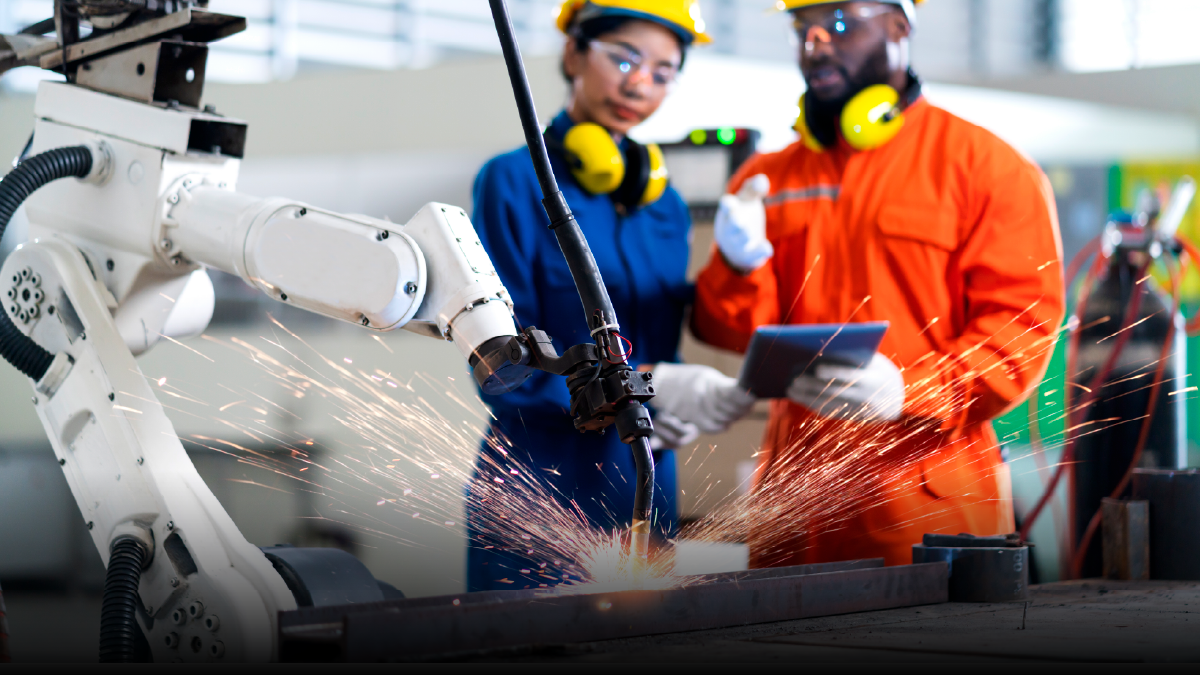
Robotics is also evolving. Earlier, robots needed controlled environments. Fixed paths, predictable tasks. Now they are learning to handle variation. With physical AI, they can adapt to changes and work alongside humans.
Cobots are a good example. They don’t replace workers. They support them. Humans handle judgment and exceptions, while robots take care of precision and repetition.
Additive manufacturing is another piece that is gaining importance. It’s not just about prototyping anymore. In electronics and semiconductors, it is helping create complex parts faster. It also reduces reliance on long supply chains. You can produce closer to where you need it.
And then there is sustainability. For a long time, it was seen as a trade-off. Either you focus on efficiency or you focus on reducing impact.
That idea is breaking down.
Leading factories are showing improvements in productivity, energy efficiency, and emissions at the same time. That changes how companies think about sustainability. It is no longer just compliance. It is becoming part of performance.
Transforming Semiconductor and Electronics Fabrication
If you really want to see advanced manufacturing pushed to its limits, look at semiconductors.
This is not an industry where you can afford mistakes. Even the smallest defect can cause big problems.
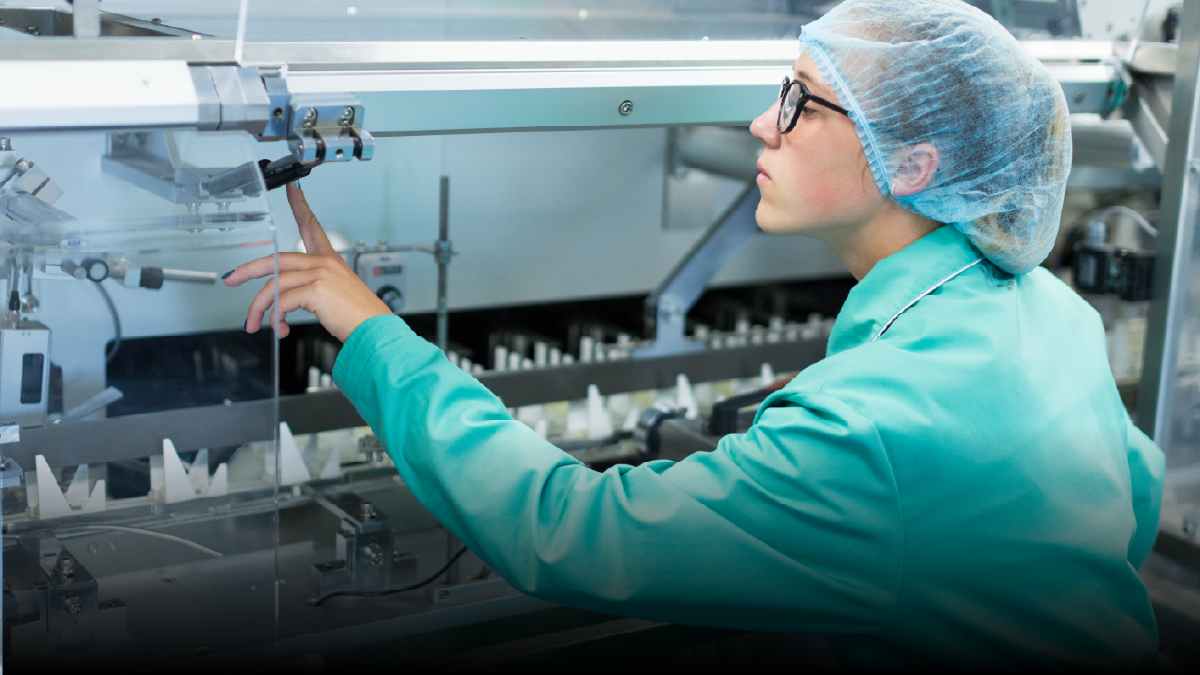
Start with yield optimization. Defects are not always visible. Human inspection has limits. AI systems step in here by analyzing large datasets and spotting patterns that would otherwise go unnoticed. This helps catch issues early and improve output without increasing costs.
Then comes miniaturization. Components are getting smaller and more complex. Manual precision can only go so far. Precision robotics handles these tasks with consistency. It doesn’t get tired, and it doesn’t lose focus.
Supply chains in this industry are also complicated. Global, interconnected, and fragile at times. One disruption can affect multiple sectors. Digital twins allow companies to simulate these disruptions and prepare for them.
The results are not minor. Some advanced factories are seeing around 40% increase in productivity and close to 48% reduction in lead times.
That is not a small upgrade. That is a different level of performance altogether.
Why Legacy Systems Are Failing
Traditional manufacturing systems were built for stability. They work well when everything is predictable.
But that’s not the world we are in anymore.
| Factor | Traditional Manufacturing | Advanced Manufacturing |
| Flexibility | Fixed and rigid | Adaptable and responsive |
| Workforce Skills | Manual and repetitive | Digital and analytical |
| Data Usage | Limited and delayed | Real-time and predictive |
| Scalability | Slow and linear | Fast and modular |
The problem is not that traditional systems are inefficient. The problem is that they are not built to handle constant change.
When demand shifts or disruptions happen, they struggle to keep up.
Advanced manufacturing is built for that uncertainty. It allows companies to adjust without breaking the system.
The Road to Implementation
Now this is where things get difficult.
Understanding the concept is one thing. Making it work is something else.
The skills gap exists as a genuine problem. The speed of technological progress exceeds the ability of people to keep up with its advancements. The manufacturing industry requires personnel who possess expertise in operating machinery and analyzing data. The required skills for this position remain difficult to locate.
So companies need to invest in training. Not just tools.
Cybersecurity is another issue. More connected systems mean more risk. Ransomware attacks are becoming common in manufacturing. And the impact is serious.
Security cannot be treated as an afterthought anymore. It has to be part of the system from day one.
Then there is the cost. Advanced manufacturing requires investment. And returns are not always immediate.
This is where many companies hesitate.
But over time, the benefits start showing. Better efficiency, less downtime, more flexibility.
The real challenge is not just money. It is staying committed long enough to see the results.
The Future of Industry 5.0
Advanced manufacturing is not about removing humans from the process. That’s a misunderstanding.
It is about changing what humans focus on.
Machines handle repetitive tasks and data-heavy work. Humans focus on decisions, problem-solving, and creativity.
That’s where things are heading.
Industry 5.0 will push this further. More collaboration between humans and machines. More adaptability in systems.
And here’s the uncomfortable truth.
If companies don’t move in this direction, they don’t stay where they are. They fall behind.
The gap is already forming.
So the real question is not whether this shift will happen. It already is.
The question is whether you are moving with it or watching it happen from the outside.