




For decades, the shipping container has been one of the most essential parts of global trade that almost nobody ever really talks about, I mean not in a clear way. It carries electronics, medicines, food, machinery and pretty much everything else that helps economies keep going. And yet, even though it transports the worlds cargo, the container itself has often been kind of surprisingly dumb. Once the doors close and the shipment leaves the port, companies frequently have to wait for updates, instead of actually seeing what is going on in real time.
That gap is becoming a real headache though. Supply chains are being pushed to move faster, rebound quicker, and offer traceability at every step. But the truth is a lot of firms are still finding it hard to reach that. A recent global survey of 100 supply chain leaders showed that many still haven’t fully recovered the real depth of their supply chain visibility after years of damage. People also rated their weakest performance on supply visibility over the next five years. Smart shipping containers are starting to show up as a direct fix, basically turning those cargo boxes into connected assets that make data, sharpen decisions, and provide a transparency level that older logistics could not deliver, not in the same manner.
What Is a Smart Shipping Container?
A smart shipping container is an ISO container equipped with integrated IoT sensors, telematics systems, connectivity technologies, and power solutions that continuously collect and transmit operational data throughout its journey.

The definition sounds technical. The concept isn’t.
A traditional shipping container carries cargo from Point A to Point B. A smart shipping container carries cargo while constantly reporting what is happening along the way.
That difference changes everything.
For years, logistics teams operated with limited visibility. Containers moved through ports, rail networks, warehouses, and vessels, but updates often arrived hours or even days after something had already gone wrong. Delays were discovered late. Temperature issues were identified after damage occurred. Security incidents were sometimes noticed only after the shipment reached its destination.
Smart containers flip that model on its head.
Instead of waiting for information, companies receive it as events happen. They can track movement, monitor conditions, and respond before small issues become expensive disruptions.
The contrast between traditional and smart containers is becoming impossible to ignore.
Traditional containers are largely opaque. They depend on manual inspections, paperwork, port scans, and reactive reporting. Information moves slowly because people move it.
Smart containers are transparent. They generate real-time cargo tracking data, communicate through cellular and satellite networks, and proactively alert operators when conditions change.
In other words, the shipping container is no longer just a steel box. It is becoming a source of intelligence.
How Smart Shipping Containers Transmit Data at Sea
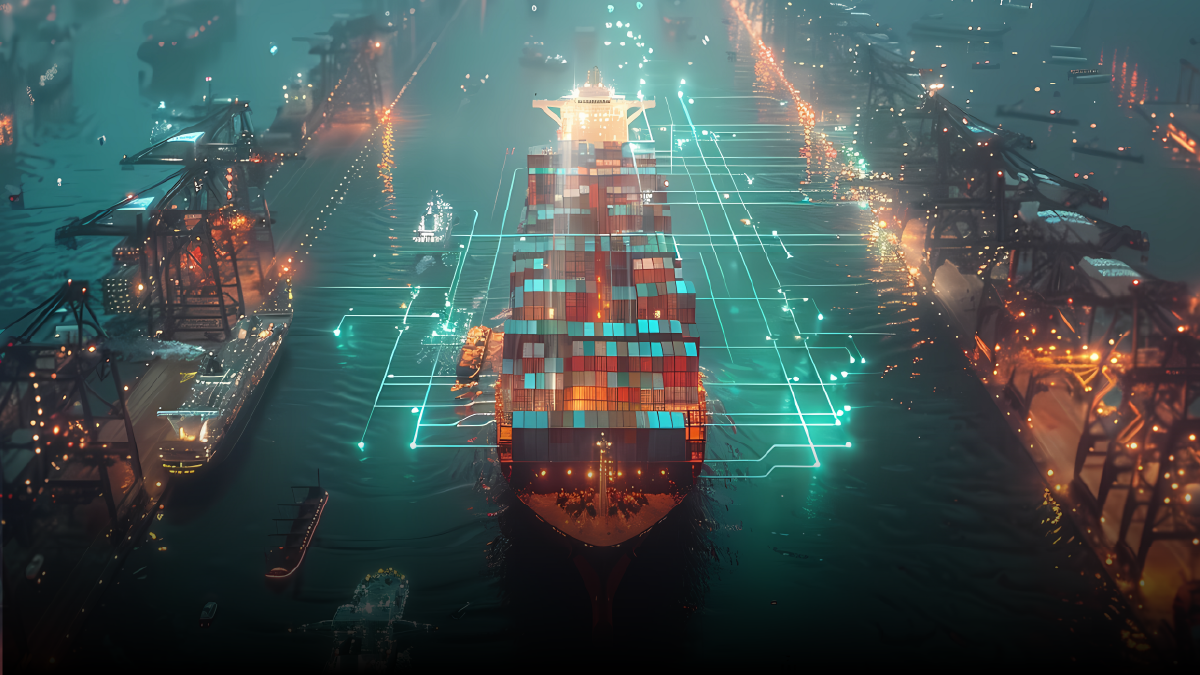
The technology behind smart shipping containers is not built around a single breakthrough. It is a combination of sensors, connectivity systems, and power management working together.
The first layer is the sensor network.
These sensors monitor different aspects of a shipment’s journey and continuously collect operational data.
Also Read: What Is a Hyperscale Data Center and Why Is It Critical for AI and Cloud Infrastructure Growth?
Common sensor capabilities include:
- GPS and Global Navigation Satellite System tracking for real-time location visibility
- Internal temperature monitoring
- Humidity tracking
- Atmospheric pressure measurement
- Light intrusion detection for unauthorized access
- Smart digital lock monitoring
- Shock and vibration detection for cargo handling events
Each sensor sort of tells a piece of the story. Together they make this live, picture of what’s going on inside and around the container, more or less.
Of course, getting the data together is only half the effort.
That information still has to move across oceans, through harbors, along rail corridors, and into distribution networks. To pull that off, smart shipping containers depend on a blend of 5G access, low-power wide-area networks (LPWAN), conventional cellular infrastructure, and satellite IoT systems.
When a container passes through built up regions, the cellular networks usually handle the communications. Once it reaches the open ocean, satellite connectivity takes over. The handoff is designed to be seamless so that visibility is maintained throughout the journey.
Power management is another critical piece of the puzzle. Containers can remain in transit for weeks at a time. Frequent battery replacement would quickly become impractical. That is why many solutions use low-power electronics, long-life batteries, and increasingly, solar-assisted charging systems.
Then comes the challenge that many discussions overlook: data standardization.
Generating data is easy. Making that data useful across different stakeholders is much harder.
The World Customs Organization’s Data Model contains 727 data elements for customs and border regulatory processes, including Single Window environments. Standards like these help ensure that information can move between customs agencies, ports, logistics providers, and shipping operators without creating new information silos.
Without common standards, connected logistics becomes fragmented. With them, smart containers become far more valuable.
How Smart Containers Are Changing Supply Chain Operations
The biggest impact of smart shipping containers is not tracking. Tracking is only the starting point.
The real value comes from turning visibility into action.
One of the strongest examples is predictive logistics.
Traditional logistics planning relies heavily on schedules and historical assumptions. The problem is that supply chains rarely behave exactly as planned. Ports become congested. Weather changes. Transportation bottlenecks kind of appear out of nowhere.
Smart containers, they deliver a steady stream of operational information so companies can adjust on the fly instead of, you know, reacting only after the damage is done.
Location data along with environmental conditions and shipment status updates, all of that helps sharpen ETA calculations and makes routing decisions more fluid. Rather than waiting for a disruption to show up first, operators can course-correct while the shipment is still moving.
And this is also where AI is starting to get a bigger say.
As per a 2026 survey, 30% of retailers already use AI for supply-chain visibility, and it should climb to 41% in the next year.
That shift matters, because AI systems aren’t better than the data that feeds into them. Smart containers provide exactly the kind of real-time operational intelligence these systems need.
The benefits become even more obvious in cold chain logistics.
Food products, pharmaceuticals, vaccines, and specialty chemicals all depend on strict environmental controls. A single temperature excursion can turn valuable cargo into a complete loss.
Historically, companies often discovered those problems after delivery. By then, the damage had already been done.
Smart shipping containers change that equation by continuously monitoring environmental conditions. If temperatures move outside acceptable ranges, alerts can be generated immediately. Operators gain an opportunity to intervene before cargo becomes unusable.
Another big area of transformation is customs processing, honestly.
Cross-border trade has traditionally meant paperwork approvals, and a lot of admin friction. Even though some progress has been made, a whole set of processes still add delays, and those delays then keep rippling through the entire supply chain, like it just spreads, faster than you’d expect.
The WTO Trade Facilitation Agreement was set up to make the movement, release and clearance of goods quicker, including goods that are in transit. It also pushes electronic payments for customs duties and fees when it is workable.
So this push toward digital trade fits pretty smoothly with smart container technology. Things like digital manifests, shipment telemetry, and connected tracking systems can help produce quicker, more transparent customs workflows.
In the end you get a logistics ecosystem that moves with less friction, and with better visibility, overall.
The Roadblocks Slowing Adoption
The case for smart shipping containers is compelling. The path to universal adoption is not.
The first challenge is cost.
Retrofitting containers with sensors, communication hardware, monitoring platforms, and connectivity services requires investment. Large global operators may be able to justify those costs through efficiency gains and risk reduction. Smaller freight forwarders often face a more difficult calculation.
The second challenge is cybersecurity.
Every connected device increases the attack surface. As millions of IoT-enabled assets become part of global trade networks, the risk of malware, unauthorized access, and data manipulation grows alongside the benefits.
Visibility is valuable. Trusted visibility is what actually matters.
The third challenge is integration.
Many warehouses, ports, and transportation facilities still rely on legacy infrastructure. Integrating modern IoT data streams into older warehouse management systems and operational platforms is rarely straightforward.
This is where many digital transformation projects slow down. The container may be smart, but the surrounding ecosystem often isn’t.
Technology adoption is rarely about technology alone. It is usually about how quickly organizations can adapt their processes around it.
Conclusion
The conversation around smart shipping containers is often framed as a technology story. It is actually a visibility story.
The logistics industry spent years accepting blind spots because there were few practical alternatives. That mindset is becoming harder to defend. Supply chains are more complex, customer expectations are higher, and disruptions travel faster than ever.
Smart containers do not eliminate every challenge facing global logistics. They do, however, remove one of the industry’s oldest weaknesses: operating without enough information.
That is why this shift matters. Industry leaders keep saying digitalization is going to be crucial, not just for efficiency, but for dealing with rising compliance and the reporting requirements too. In that kind of context, visibility kind of stops being some clever competitive edge and it turns into a basic need, like almost a requirement, period.
The shipping container is no longer just something companies track. It is becoming something that actively contributes to decisions. Businesses that embrace that reality will operate with more clarity. Those that do not may find themselves making critical supply chain decisions with less information than their competitors.