




This week’s developments highlight how AI, advanced electronics and connected research are reshaping industries beyond traditional software. From autonomous trucking and automated freight operations to satellite timing components and precision oncology, businesses are investing in technologies designed to improve reliability, efficiency and scalability. These announcements share a common theme: innovation creates its greatest value when it addresses real operational constraints, whether that means moving goods more efficiently, enabling reliable space missions or accelerating research into cancer treatments.
Three Developments Worth Watching
-
Einride and NVIDIA advance autonomous trucking: AI reasoning models could help autonomous freight systems interpret complex driving environments.
-
Loadsmart expands its AI platform to 11 agents: Freight operators are moving towards broader automation across transportation and warehouse workflows.

-
Leidos brings AI automation to Pentagon logistics: Defense supply chains are exploring ways to modernize complex, mission-critical operations.
5 Industry News Stories
1. Microchip Adds LX-820 Quartz Oscillator for Low Earth Orbit Applications
Microchip Technology has introduced the LX-820 radiation-tolerant quartz oscillator for low Earth orbit satellites, expanding its L-Series timing portfolio with a compact component designed to balance reliability, availability and cost.
Satellite developers face pressure to control procurement costs and avoid component shortages without compromising mission reliability. The LX-820 could broaden access to precision timing components for communications, navigation and Earth-observation systems. Its availability may also help reduce development delays for satellite manufacturers. However, component selection will still depend on each mission’s radiation tolerance, frequency stability and environmental requirements. As satellite deployments grow, accessible and dependable components will become increasingly important to the economics of space infrastructure.
2. Einride Partners with NVIDIA to Advance Autonomous Trucks
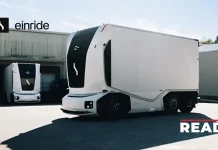
Einride is adopting NVIDIA’s Alpamayo AI reasoning model for its autonomous trucking system, aiming to improve driving decisions, reduce development costs and expand autonomous freight operations across additional routes.
The collaboration reflects a shift towards AI models that can interpret complex driving situations rather than relying exclusively on predefined responses. If successful, the approach could help autonomous trucks handle varied road conditions and shorten the time required to validate new routes. Einride plans live road evaluation for the second half of 2027. Safety remains central: the model will operate within Einride’s existing safety architecture, with established systems retaining control during testing. Commercial adoption will depend on proving reliability under real-world conditions.
3. Fortrea and OMICO Partner to Advance Precision Oncology Research
Fortrea and OMICO are combining clinical research expertise, genomic profiling, patient-matching capabilities and oncology data to support biomarker-driven clinical trials and expand access to precision cancer research.
Clinical trials can struggle to recruit participants whose cancers match specific molecular biomarkers. Connecting OMICO’s precision oncology network with Fortrea’s drug-development experience could improve patient identification, trial planning and recruitment. This may help researchers evaluate targeted treatments more efficiently and reduce avoidable delays. The wider opportunity is to make oncology research more closely aligned with individual tumor biology. However, improved matching does not guarantee successful treatments; outcomes will depend on trial design, patient access, clinical evidence and the effectiveness of investigational therapies.
4. Leidos Brings AI Automation to the Pentagon’s Logistics System
Leidos has secured a potential $95 million, five-year Defense Logistics Agency contract to modernize the Pentagon’s Enterprise Logistics Management System using AI automation, cloud technologies and modern software development.
The system supports more than 50 agencies managing over 80 million government property items valued at more than $140 billion. Improving asset visibility and automating administrative processes could help reduce inefficiencies across a complex defense logistics network. More accurate records and faster software delivery may also support military readiness by improving the availability of essential equipment. The broader significance is that AI adoption in government is moving into foundational operational systems. Security, auditability and reliable asset data will be critical to realizing those benefits.
5. Loadsmart Expands Its AI Platform to 11 Agents for Freight Operations
Loadsmart has expanded its AI platform to 11 agents covering freight scheduling, tracking, purchase orders, detention management, warehouse coordination, claims and other logistics workflows.
The expansion signals a move from isolated logistics automation towards agents handling connected operational tasks across transportation, warehouse and enterprise systems. Loadsmart says its agents can complete 70% to 90% of tasks independently, with freight experts handling the remainder. If performance holds at scale, businesses could reduce repetitive administration and free employees to manage exceptions and customer relationships. The critical test will be coordination across systems: autonomous agents must maintain accurate records, respect operating rules and escalate unusual situations before small errors disrupt shipments.
ReadMagazine Featured Article
What Is Industrial Cybersecurity and How Can Manufacturers Protect Critical Infrastructure From Cyberattacks?
Industrial cybersecurity protects factory equipment, operational technology, industrial control systems and connected infrastructure from cyber threats. The article explores risks such as ransomware, unauthorized access and production disruption, alongside defenses including network segmentation, continuous monitoring, access controls and employee training. It emphasizes integrating cybersecurity into operational resilience to protect manufacturing continuity, safety and supply chains.
ReadMagazine Weekly Observations
This week’s developments reveal how innovation is addressing practical constraints across industries: component availability in space, safety in autonomous transport, patient recruitment in oncology, asset visibility in defense and repetitive work in logistics. AI and advanced engineering can improve efficiency, but neither eliminates the need for dependable systems and human oversight. The strongest results will come when organizations integrate new capabilities into existing operations and measure their real-world performance.