


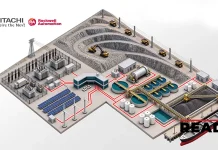

The global world of energy, power, and industrial manufacturing is faced with an operational challenge-the electrification and decarbonization of energy-consuming industries. In the case of heavy industries, which include mining, metals, oil and gas, chemical industries, and water management, their attempt to reach global net-zero objectives involves overcoming one major structural issue-the separation of power grids and automation processes.
Decades ago, the industrial manufacturing plants worked in such a way that there were clear architectural barriers between power infrastructure and process automation.
High voltage power grids, stations, and transformers were operated by electrical engineers through energy management systems.

At the same time, plant automation, motor drives, PLCs, and production lines were controlled separately by OT engineers.
When high voltage electrical infrastructure works without any data synchronization with industrial automation infrastructure, manufacturing plants experience a serious operational friction.
Power consumption by industrial processes at peak hours increases the cost of electricity, destabilizes local frequency in power grids, and leads to unscheduled equipment downtime.
Sustainable decarbonization of heavy industry involves implementation of Power and Automation Digital Fabric.
Addressing this industrial convergence challenge, global energy technology leader Hitachi Energy and industrial automation pioneer Rockwell Automation, Inc. announced a strategic collaboration to integrate power technology and industrial automation frameworks.
By uniting Hitachi Energy’s high-voltage power grids, grid-edge solutions, and energy management software with Rockwell Automation’s industrial control engines and smart manufacturing systems, the alliance provides heavy industries with an integrated digital architecture designed to accelerate industrial electrification, optimize energy consumption, and strengthen grid resilience.
Uniting Grid-Edge Infrastructure with Plant Automation
The strategic alliance between Hitachi Energy and Rockwell Automation focuses on removing technical barriers from heavy industrial decarbonization. By co-engineering pre-validated interfaces between Hitachi Energy’s grid-edge solutions-including microgrid controllers, transformers, and battery energy storage systems (BESS)-and Rockwell’s FactoryTalk® software suite and PlantPAx® distributed control systems (DCS), the collaboration enables industrial operators to synchronize power demand directly with production workflows.
Key technical and operational pillars of the collaboration include:
Pre-Validated Power and Automation Architectures: Saves time and money from custom engineering with pre-integrated co-validated control designs that connect power distribution hardware straight into industrial automation systems.
Dynamic Real-Time Load Management: Empowers the automation system to automatically change the throughput of high-mass manufacturing machinery using real-time data about available grid power, electricity pricing, and BESS charge status.
Microgrid and BESS Standardized Integration: Streamlines the deployment of decentralized microgrids in mining, chemical, and manufacturing plants, providing quality power with no outages.
Also Read: IBM and Siemens Partner on Joint Research to Advance NanoStack Chip Architecture
Integrated Lifecycle Digital Twins: Integrates digital power grid twins with plant simulation models, enabling plant managers to evaluate their energy efficiency and carbon footprint over the entire lifecycle of the plant.
“We need to think differently about power and process automation design in order to accelerate the decarbonization of industry,” said Claudio Facchin, President and CEO of Hitachi Energy.
Impact on the Energy & Power Industry
The strategic alliance between Hitachi Energy and Rockwell Automation highlights major developments across the broader Energy & Power landscape:
1. Shifting from Passive Power Consumption to Grid-Active Industrial Plants
Historically, heavy industrial facilities functioned as passive energy consumers, pulling electricity from central utility grids regardless of grid stress or market pricing. Co-engineering power and automation formalizes the transition toward Grid-Active Industrial Infrastructure. Industrial facilities are transforming into flexible power assets capable of shedding peak electrical loads and maintaining stable operations during utility power surges.
2. Establishing Power-Automation Convergence as an Industry Standard
Procurement of power distribution and process control in classical industrial engineering was achieved via different vendor agreements leading to disparate IT/OT system architecture. The consolidation of Hitachi Energy and Rockwell Automation clearly illustrates why Power-Automation Convergence is Essential for Electrification as enterprise industrial customers require pre-integrated platforms without the need for custom middleware development.
Overall Impact on Companies Doing Business in the Industry
Industrial plant managers, utility network operators, commercial mine managers, and energy software engineers are among those who will benefit from the Hitachi Energy and Rockwell Automation collaboration in the following ways:
Reduced Industrial Electricity Costs: Process-based peak-shaving and dynamic load balancing help large manufacturing facilities lower peak electricity billing costs.
Increased Operational Resilience: Microgrid management keeps off power fluctuations and resulting production shutdowns in the event of blackouts.
Faster Capital Project Timelines: Use of pre-tested power and automation design platforms helps to shorten engineering and commissioning timeframes for new manufacturing sites.
Conclusion
Hitachi Energy and Rockwell Automation’s strategic collaboration represents a milestone in the commercial convergence of industrial power infrastructure, process automation, and enterprise sustainability. By pairing Hitachi Energy’s global grid-edge authority with Rockwell Automation’s industrial control leadership, these two pioneers provide a practical blueprint for the electrified industrial enterprise. For the global energy and power industry, this news confirms that achieving net-zero industrial manufacturing relies on fast, integrated, and intelligent digital foundations capable of balancing electrical supply with physical production in real time.