





A factory can run at full capacity and still waste money every hour.
That is the uncomfortable part of industrial energy management. Energy costs are no longer something manufacturers can simply absorb into operating expenses. Volatile prices, grid pressure and tighter carbon reporting are forcing plant leaders to look much closer at how electricity, heat and fuel move through their facilities.
The old approach was straightforward. Check the utility bill, find an unusually high month and try to explain it. Honestly, that’s not enough anymore. Manufacturers end up needing to figure out which machine is eating up more than it should, you know, where heat is escaping in the first place and when demand is basically turning into needless costs.

That shift is pushing the adoption of industrial energy efficiency solutions, that bring together upgraded equipment along with sensing tools, analytics, automation and more intelligent control logic. This article covers five of the most practical approaches, and more importantly, how each one can help energy performance along with manufacturing economics, at the same time.
What Are Industrial Energy Efficiency Solutions?

Industrial energy efficiency solutions are technologies and operating practices that help factories produce the same output with less wasted energy.
The distinction is important. Cutting energy use by slowing production is not real efficiency. A better outcome is reducing the energy required for each unit produced while maintaining throughput, quality and equipment reliability.
That is why modern industrial energy efficiency solutions usually involve two connected layers.
The first is physical. Motors, VFDs, compressed-air systems and waste heat recovery equipment can directly reduce energy losses. The second is digital. IoT sensors, sub-metering, analytics and energy-management software show plant teams what is happening across the operation.
Neither layer is enough on its own. Efficient equipment can still be poorly operated. Data can also become useless if nobody acts on it. The real opportunity comes from connecting the two.
Top 5 Industrial Energy Efficiency Solutions Transforming Manufacturing
1. AI-Driven Energy Management Systems and Predictive Analytics
Energy management becomes far more useful when it moves from reporting to decision-making.
An AI-driven energy management system can study consumption patterns alongside production activity and identify where demand is changing. It can support load shifting, help manage peak demand and make energy use more responsive to operating conditions.
That matters because factories rarely consume energy at a perfectly steady rate. Production schedules change. Machines start and stop. Heating loads rise. Demand can spike at the wrong time. A system that can spot those patterns gives plant teams more room to act before the cost shows up on the bill.
NIST’s 2026 AI and machine learning roadmap for smart manufacturing points to greater efficiency, adaptability and autonomy as potential benefits of industrial AI. It also highlights something less glamorous but more important. Industrial data can be complex, sensing and control systems may not integrate easily, and trustworthy AI remains a practical challenge.
That is the reality behind industrial energy efficiency solutions using AI. The algorithm is only one part of the system. Good data and reliable plant controls have to come first.
2. Smart Motors, Variable Frequency Drives and IE5 Efficiency
Motors rarely get the attention that AI does. They probably should.
A motor that runs for long hours can become a persistent source of energy loss, particularly when it is old, oversized or operating away from its ideal load. Replacing suitable equipment with IE4 or IE5 motors can improve efficiency, while variable frequency drives can go one step further by allowing motor speed to respond to actual demand.
That makes VFDs especially useful for applications such as pumps and fans where the required output changes during the production cycle.
Still, replacing every motor simply because a newer model exists would be a poor investment strategy. Plant leaders need to look at operating hours, load patterns, motor condition and the process itself.
The question should not be ‘What is the newest motor available?’ It should be ‘Where is the current motor wasting energy, and will a better-controlled system change the economics?’
That is a much more practical way to approach industrial energy efficiency solutions.
3. IoT Sensor Networks and Facility Sub-Metering
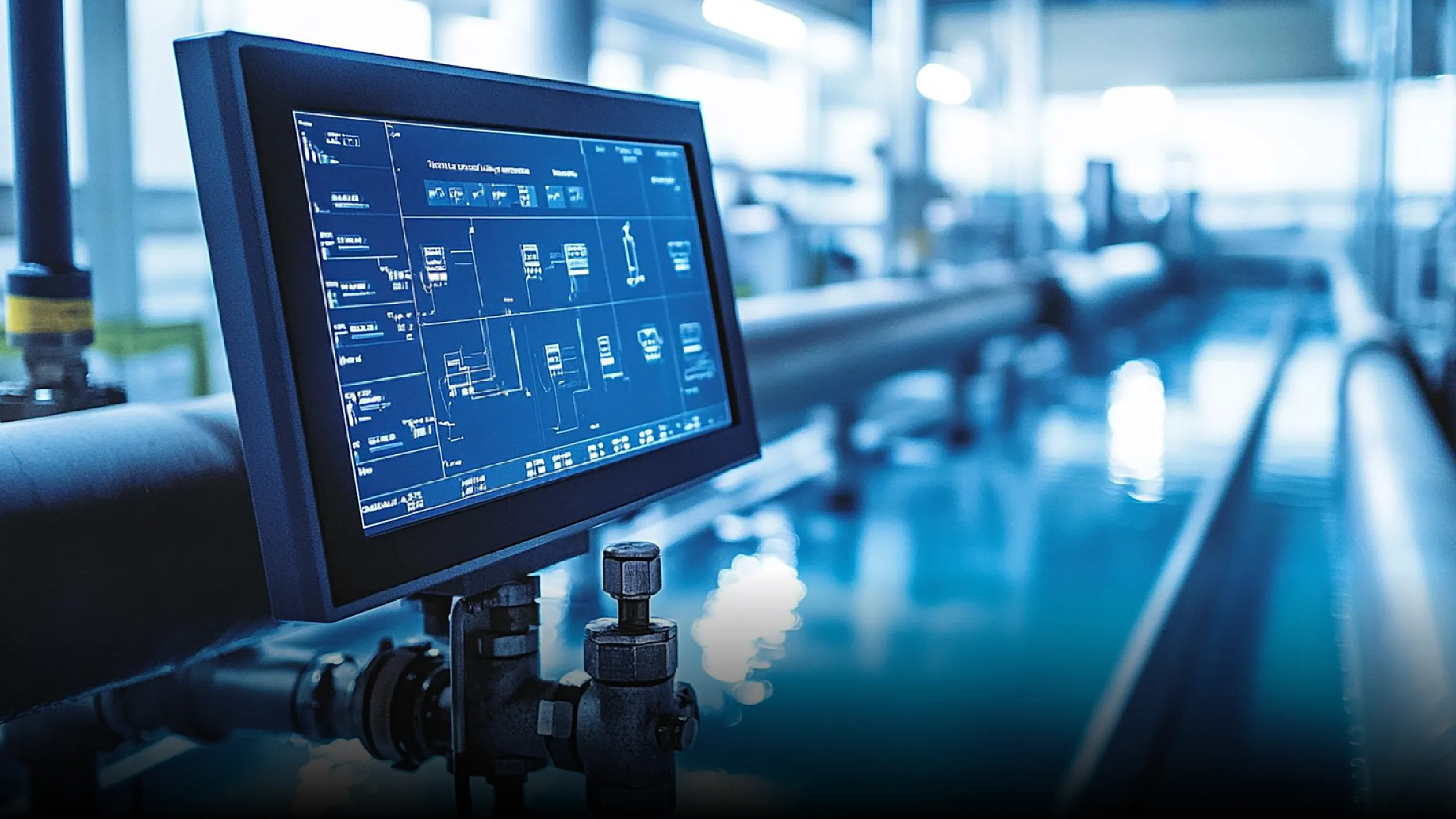
A utility bill tells a manufacturer how much energy the facility consumed. It does not necessarily explain why.
That is the gap IoT monitoring and sub-metering can close.
Sensors and connected meters can provide energy data at the machine, line or process level. Instead of seeing one large number for the entire facility, operators can start identifying which assets are consuming more energy than expected and which production areas are responsible for unusual changes.
Rockwell Automation describes this move toward more granular energy visibility, where production information can be connected with energy data across different levels of a facility.
Also Read: What Is an ERP System for Manufacturing and How Can It Transform Factory Operations?
That changes the conversation on the factory floor. An energy spike is no longer just a finance problem discovered at the end of the month. It becomes an operational signal that maintenance or production teams can investigate.
This is one of the less flashy industrial energy efficiency solutions, but it can become the foundation for the others. Without visibility, optimization is mostly guesswork.
4. Waste Heat Recovery and Combined Heat and Power
Factories do not only waste electricity. They can also waste useful heat.
High-temperature operations such as ovens, kilns and boilers can release thermal energy through exhaust streams. Instead of allowing that heat to disappear, waste heat recovery systems can capture and redirect it for useful applications.
Depending on the process, recovered heat can support steam generation, heating or cooling requirements. Combined heat and power can also make sense in facilities where producing useful heat and electricity together fits the site’s energy profile.
UNEP identifies industrial waste-heat reuse as an energy-efficiency opportunity, including recovering heat for applications such as process cooling.
The catch is that waste heat recovery is not a universal retrofit. A plant needs a suitable heat source, enough operating consistency and somewhere useful to send the recovered energy.
That makes process mapping essential. The best industrial energy efficiency solutions are not necessarily the most sophisticated ones. They are the ones that solve a real energy problem at the plant.
5. Automated Compressed Air Optimization and Leak Auditing
Compressed air is one of those systems that can look perfectly healthy while quietly wasting energy.
Leaks are an obvious problem, but they are not the only one. Excessive pressure, poor controls and unnecessary demand can also force compressors to work harder than required.
Automated monitoring can help identify abnormal consumption and give operators a clearer picture of how the compressed-air system behaves during production. Acoustic leak detection can then help locate problems that are difficult to find through occasional manual inspections.
A 2026 Rockwell Automation case study involving DENSO’s Battle Creek facility reported a 26% reduction in compressed-air energy use, along with $350,000 in annual energy-cost savings and 3,110 metric tons of annual carbon reduction.
That result belongs to a specific facility and should not be treated as a universal benchmark. Still, it makes the business case tangible. A focused efficiency project can affect energy consumption, operating costs and emissions at the same time.
Financial Impact and How Efficiency Solutions Lower Manufacturing Operating Costs
The financial case for industrial energy efficiency solutions starts with the obvious benefit. Use fewer kilowatt-hours or less thermal energy and the utility bill can fall.
But that is only the first layer.
Better energy management can also reduce unnecessary equipment operation, improve load control and help maintenance teams identify abnormal behavior earlier. Over time, those operational improvements can matter just as much as the electricity savings themselves.
IEA’s competitiveness analysis says energy management can deliver more than 10% annual industrial energy-cost savings within three years, with savings potentially reaching up to 60% over the longer term as additional opportunities are identified.
That should not be read as a guaranteed return. Manufacturing plants differ too much for that. Tariffs, production schedules, equipment age and process requirements all change the economics.
The more useful takeaway is that energy management can become an ongoing cost-reduction discipline rather than a one-time retrofit.
Comparing Industrial Energy Efficiency Solutions
| Solution Category | Initial Capital Outlay | Main Cost-Saving Mechanism | Payback Drivers |
| AI-EMS Software | Low to medium | Demand and operational optimization | Data readiness, tariffs and plant scale |
| Smart Motors and VFDs | Medium | Matching output with actual demand | Operating hours and load profile |
| Waste Heat Recovery | Medium to high | Recovering otherwise wasted thermal energy | Heat availability and process integration |
| Compressed Air Optimization | Low to medium | Reducing leaks and unnecessary compressor load | System condition and operating hours |
The smarter question is not which technology promises the biggest percentage reduction. It is which source of waste is costing the plant the most right now.
A 4-Step Implementation Roadmap for Plant Leaders
Step 1: Establish the Energy Baseline
Start with an energy audit and identify the plant’s largest loads and waste points. An ISO 50001-aligned approach can provide structure, but the immediate goal is simple. Understand where energy is going and how that consumption relates to production.
Step 2: Fix the Obvious Waste First
Repair compressed-air leaks. Review inefficient motors. Remove unnecessary loads. Improve controls where the process allows it. These measures may sound basic, but ignoring them while investing heavily in advanced software makes little sense.
Step 3: Connect Plant Data to Automated Energy Management
Once the basics are under control, connect IoT telemetry and sub-metering with energy-management software. That creates the data layer needed for predictive analytics and automated optimization.
The direction of the market is already moving this way. 59% of industrial leaders surveyed by Siemens plan to use demand-side flexibility mechanisms to optimize energy use.
The important shift is from simply measuring consumption to actively deciding when and where energy should be used.
Step 4: Monitor Performance and Keep Improving
Efficiency should not end when the equipment is installed. Track energy intensity, production performance and relevant Scope 1 and Scope 2 emissions over time.
Then repeat the process.
Measure the result. Find the next waste point. Improve it. Verify the change.
That continuous loop is what turns industrial energy efficiency solutions into an operating system rather than a collection of disconnected projects.
Conclusion and Strategic Next Steps
Energy efficiency is often discussed as if manufacturers have to choose between lower costs and sustainability. That is the wrong framing.
The stronger plants will treat energy as an operational variable, just like production capacity, quality or maintenance. They will know where consumption is rising, understand why it is happening and have the controls needed to respond.
Still, buying an AI platform or replacing a few motors does not automatically create efficiency. The hard part is finding the waste that actually matters and proving that an intervention changes the economics.
That is why the practical starting point is an energy assessment. Map the major loads, identify the expensive inefficiencies and rank them by business impact. Then build the technology roadmap around those findings.
In 2026, industrial energy efficiency solutions are becoming less about ‘saving energy’ and more about running the factory intelligently.