



A pharmaceutical supply chain is basically the whole interconnected network, that moves a medicine from raw material sourcing through all the way to the patient, while still guarding its quality safety compliance, and availability at basically every step. In 2026 it is no longer only about moving products from one place to another, like simple transport stuff. It feels more like a connected system where digital tools help companies foresee risks respond more quickly and make sure patients receive the correct medicine when they need it.
Nobody talks about the pharmaceutical supply chain when everything works. People simply expect medicines to be available. The conversation begins only when shelves are empty, shipments get delayed, or a critical drug suddenly goes missing. That old supply chain was built to be efficient. Today’s one has to survive uncertainty as well. It operates across countries, faces tighter regulations, and deals with changing demand almost every day. The WTO’s March 2026 outlook is projecting merchandise trade growth of up to 2.4% in a best-case upside scenario, and it sort of explains why cross-border commerce still sits right at the center of pharmaceutical making.
In this article, we’ll look at how digital innovation is shifting the pharma supply chain, not just with smarter manufacturing, but also with AI, IoT, and that end-to-end traceability kind of visibility.
From API Sourcing to Patient

Every medicine does this long journey, before it finally reaches a patient. Most people only notice the end result sitting on a pharmacy shelf but the real work kind of begins way earlier. The pharmaceutical supply chain links several stages that have to cooperate, without compromising quality, safety, or regulatory standards. If one stage drags along, the consequences ripple across the whole chain, not just in that small area.
It usually starts with sourcing and procurement. Pharmaceutical companies obtain Active Pharmaceutical Ingredients, meaning APIs, along with excipients, packaging materials, and other critical inputs from approved suppliers. Money still matters, yet it is no longer the main deciding factor. Supplier reliability and regulatory compliance, plus manufacturing quality, and even geopolitical steadiness, all become equally important. Because if something goes wrong upstream, the downstream production can end up stalled by months, sometimes more.
The next stage is manufacturing and quality control. Good Manufacturing Practice (GMP) facilities take raw ingredients and sort of turn them into finished medicines, through production processes that are tightly controlled and kept in check. In practice, each batch is tested again, validated, and then written down, before it even moves ahead. That kind of oversight, is the thing that keeps medicines consistent safe, and ready for the regulatory process approval.
Also Read: What Is Predictive Maintenance in Manufacturing and How Is AI Preventing Costly Equipment Failures?”
After production wraps up, distribution starts doing its part. The medicines travel via wholesalers, third party logistics providers, cold chain facilities, pharmacies, hospitals and broader healthcare networks, before they finally land with patients. As noted in Deloitte’s healthcare supply chain report, distributors give access to about 96% of medicines across the United States. That shows how distribution has become far more than transportation. It is the link that keeps healthcare running. When every stage stays connected and information flows alongside products, the pharmaceutical supply chain becomes faster, more resilient, and ultimately more reliable for patients.
How IoT and Next-Gen Cold Chains Protect Biologics
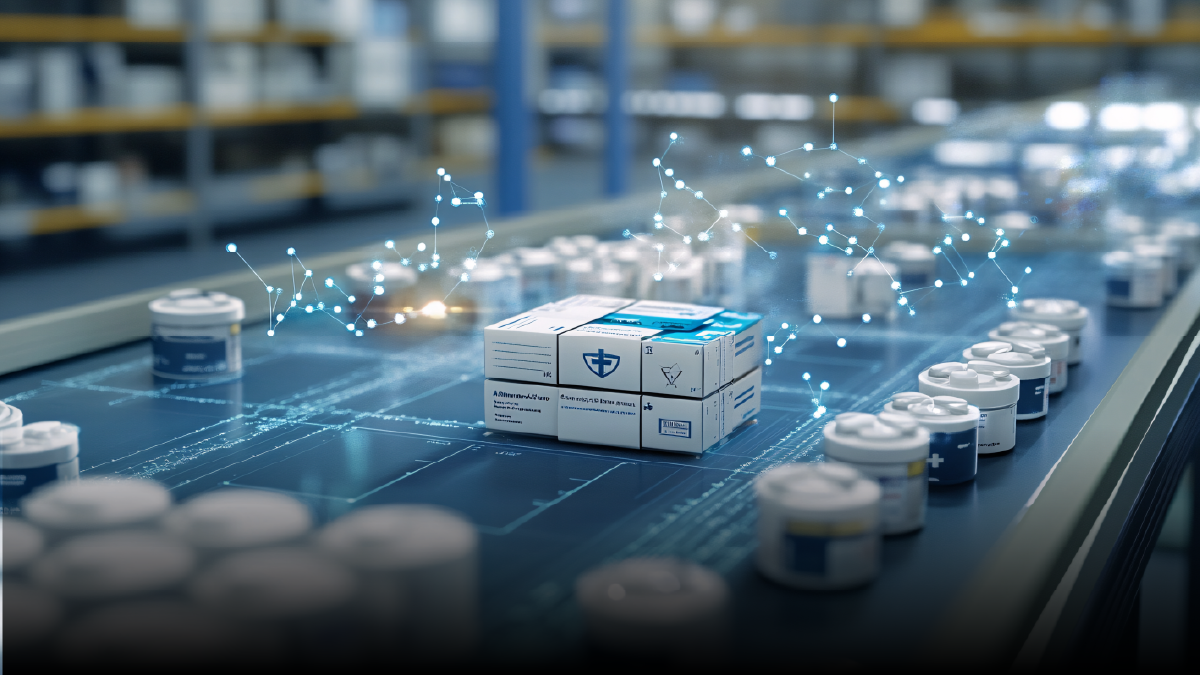
Not every medicine can survive a small change in temperature. Cell and gene therapies, biologics, and mRNA vaccines are way more sensitive than traditional drugs. Like, even a short temperature excursion during storage, or transport can cut their performance, or make a whole shipment unusable. So, that cold chain management became one of the most critical parts of the pharmaceutical supply chain, essentially.
For years, companies leaned on data loggers that recorded temperature throughout the shipment. The issue was pretty straightforward. The data got reviewed only after the product arrived at its destination. If something went wrong in transit well there wasn’t much anyone could do except throw away the shipment, and take the loss, period.
That approach is rapidly disappearing. Modern pharma supply chains now lean on cellular + Bluetooth enabled IoT sensors, that quietly track temperature, humidity, location, and also physical shock all the time, in real time. Rather than sitting around and waiting for the shipment to show up. logistics teams get immediate alerts the second conditions drift out of the approved band. This gives them a decent window to reroute the deliveries, swap out storage equipment, or take a corrective move before the medicine is properly compromised.
Smart packaging has also evolved alongside these monitoring systems. Active packaging uses powered cooling mechanisms to keep precise temperatures during long trips, while passive packaging leans on strong insulation and phase-change materials to hold a steadier climate without needing external energy. Together with live telemetry, both styles lower risk by a lot, even when routes get rough.
AWS notes that AI, machine learning, and IoT can help deliver a full view of the supply chain, enhance resilience, reduce compliance exposure, and sharpen forecasting. Basically, it means organizations aren’t just reacting when something breaks, they’re catching issues before they happen, or at least much sooner than before. They are preventing them before patients are ever affected.
Ending the Era of Drug Shortages
Drug shortages rarely happen because of a single mistake. Most of the time, they are the result of small disruptions building up across suppliers, transportation, manufacturing, and demand. The problem is that traditional planning models only respond after those disruptions become visible. By then, the damage has already begun.
AI is changing that approach. Instead of only looking at past sales, machine learning models can mash together historical order records, wider epidemiological rhythms, weather patterns, supplier performance, and logistics signals to forecast demand much sooner. This kind of approach lets pharmaceutical companies gain more time to rearrange production schedules, lock in raw materials, and steer away from supply gaps before they show up at hospitals or pharmacies.
This shift is also changing inventory strategies. For years, the pharma supply chain leaned hard on just in time practices to trim inventory costs. It seemed fine when conditions stayed calm and steady but then everything got a little, well, weird when sudden events show up and disrupt deliveries. Now many companies shift toward predictive resilience, where inventory and production plans are not ‘set and forget’ but updated over time as new signals and data roll in.
Digital twins go even further, in a kind of quiet relentless way. These virtual replicas model manufacturing networks and worldwide supply routes, so teams can run disruption scenarios and reroute essential raw materials before some nasty bottleneck forms. Microsoft also points out that generative AI plus intelligent supply chain planning are bringing higher efficiency, more agility, and better resilience, which means pharmaceutical organizations can decide faster before shortages turn into real patient problems.
Meeting Strict 2026 Global Compliance and DSCSA Mandates
Patient safety really depends on way more than just manufacturing high quality medicines. It also leans on knowing, exactly where every product came from, who touched or handled it, and if it stayed authentic all the way through its whole trip. Since supply networks are getting more global all the time, regulators keep pushing for stronger visibility across the pharmaceutical supply chain, like more and more.
Organizations such as the FDA, EMA, and WHO are still tightening expectations around traceability, while the Drug Supply Chain Security Act (DSCSA) that is fully implemented now makes electronic interoperable tracing kind of a baseline need. Every transaction, each ownership transfer, and every product movement has to be logged in a manner that can be checked quickly. That ends up making it harder for fake or counterfeit medicines to slip into legitimate networks, and at the same time it helps spot the batches that are affected during recalls, faster too.
Technology is, honestly, making that kind of transparency more possible than before. With blockchain and cryptographic ledgers, you can get secure tamper-resistant records, and they basically keep a continuous chain of custody, from the manufacturing facility all the way to wholesalers, distributors, pharmacies, hospitals, and then the patient. Rather than having scattered records sitting in separate systems, every authorized participant can check the same trusted information, more or less in sync.
Also, Microsoft points out that AI-driven planning and automation are helping the supply chain move with more agility and resilience. When you pair that with end-to-end traceability, pharmaceutical organizations can better satisfy tighter regulatory requirements while also growing real trust across the whole healthcare ecosystem.
Embracing a Resilient, Patient-Centric Future
The pharmaceutical supply chain isn’t really judged only by how fast medicines move from one point, to another like before. The real ‘test’ is whether it can keep treatments available when disruptions happen, when regulatory changes show up, or when demand spikes and basically presses on the whole system. And that’s the part where AI, IoT, and end-to-end traceability are kind of rewriting the equation.
Together they let companies notice risks earlier, respond sooner, and keep actual visibility across each phase of drug delivery. Yeah, efficiency shows up as an outcome, but it should not be mixed up as the real target. The bigger idea is resilience.
Every sharper forecast, every linked sensor, every verified shipment ends up backing one simple core point. Something that counts more than smooth operations, or swifter processing. It helps make sure safe, genuine medicines actually get to the patients who need them, no compromises, not really.