





A shipment can end up crossing five countries, touching seven logistics partners, and generating hundreds of little updates before it finally reaches its destination. And still, when things do go wrong, most companies will kind of drift back to emails, spreadsheets, phone calls, and that familiar finger-pointing. The supply chain is full of data. What it lacks is agreement on which data can actually be trusted.
What is logistics blockchain tracking? Logistics blockchain tracking leans on shared and tamper resistant digital ledgers, to note shipment moments, transactions, and the handoffs that happen in real time. It ends up making one sort of trusted history, not just for one company but across all the supply chain participants.
And honestly the timing, cannot be more important. As of January 2026, only 42% of organizations have any visibility beyond tier one suppliers. So, for most global supply chains there are still those blind spots, tucked just one layer under the surface. This article explores how logistics blockchain tracking is changing that equation through shared ledgers, smart contracts, trusted automation, and a new model of supply chain traceability built for complexity rather than certainty.

The Core Pillars Behind How Blockchain Tracks Shipments in 2026
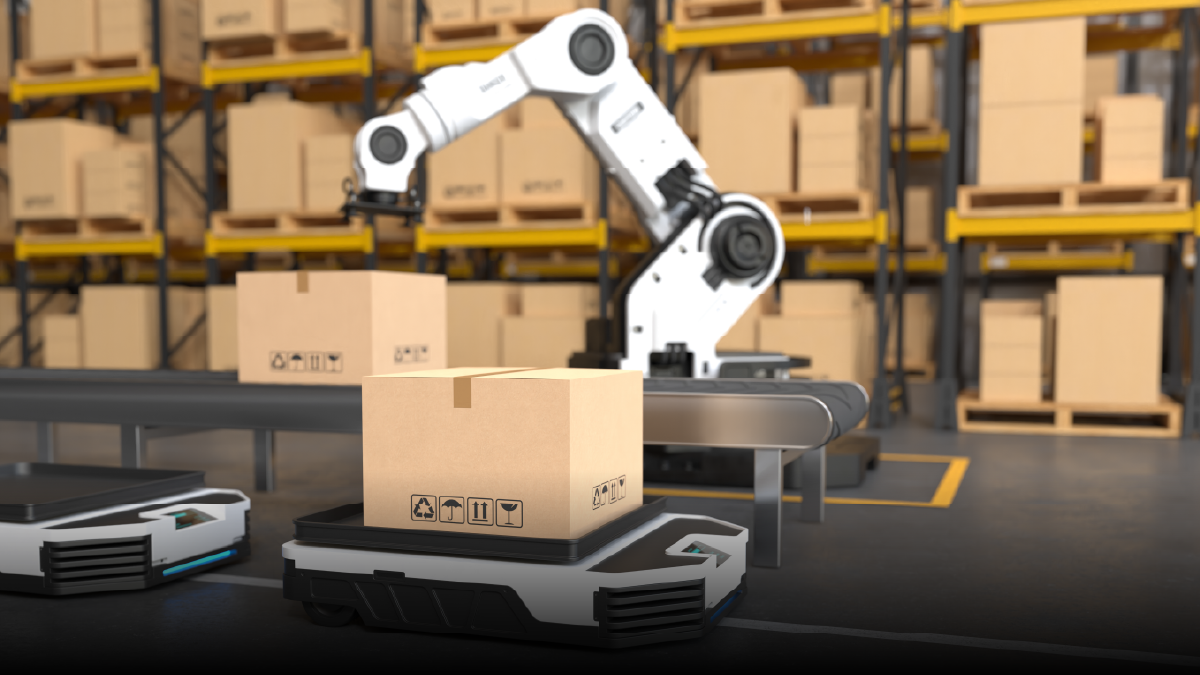
Most logistics systems were designed for a world where every participant owned their own version of the truth. Manufacturers had one database. Carriers had another. Warehouses had a third. Customs authorities maintained their own records while buyers waited for status updates that were already outdated by the time they arrived.
Blockchain flips that model on its head.
IBM talks about blockchain as a shared, immutable digital ledger, it tracks assets across a business network and sort of produces that single source of truth. And yeah, that one concept helps explain why logistics blockchain tracking is getting less tied to cryptocurrency, and more to coordination in the messy real world.
The first pillar is Distributed Ledger Technology or DLT. Instead of putting shipment events inside separate, siloed systems, every approved participant works from the same chronological record of transactions. Each update is cryptographically connected to what came before it, so you get a chain of custody that is extremely hard to mess with, without leaving a clear trail. So when a container changes hands at a port, or clears customs, every authorized party basically sees the same event history, instead of spending the day arguing over records that don’t match.
The second pillar is smart contracts. These are pieces of self-executing code that automatically trigger actions when predefined conditions are met. A delivery confirmation can release payment instantly. A temperature breach can trigger compliance alerts before a biologic shipment becomes unusable. A customs milestone can automatically update downstream inventory planning systems. The process moves from waiting for human approval to validating business rules in real time.
The third pillar sits outside the blockchain itself. Oracle middleware layers’ kind of stitch physical happenings to digital records using GPS pings, RFID readings, barcode systems, and various IoT sensors. But the ledger doesn’t really know where a truck is at, not to mention it can’t tell if a vaccine load, has stayed within the temperature line, or if it crossed that threshold. The sensors know that. Middleware simply acts as the translator between the physical world and the blockchain record.
The three pillars of blockchain visibility
- Distributed ledgers create a shared and tamper-resistant history of shipment events.
- Smart contracts automate validation, approvals, and exception handling.
- Oracle middleware securely connects real-world tracking data to the ledger.
The result is not more tracking data. The logistics industry already has plenty of that. The real shift is that every participant starts operating from the same timeline, the same evidence, and increasingly, the same version of reality.
Overcoming Legacy Vulnerabilities Through Transparency Instead of Trust
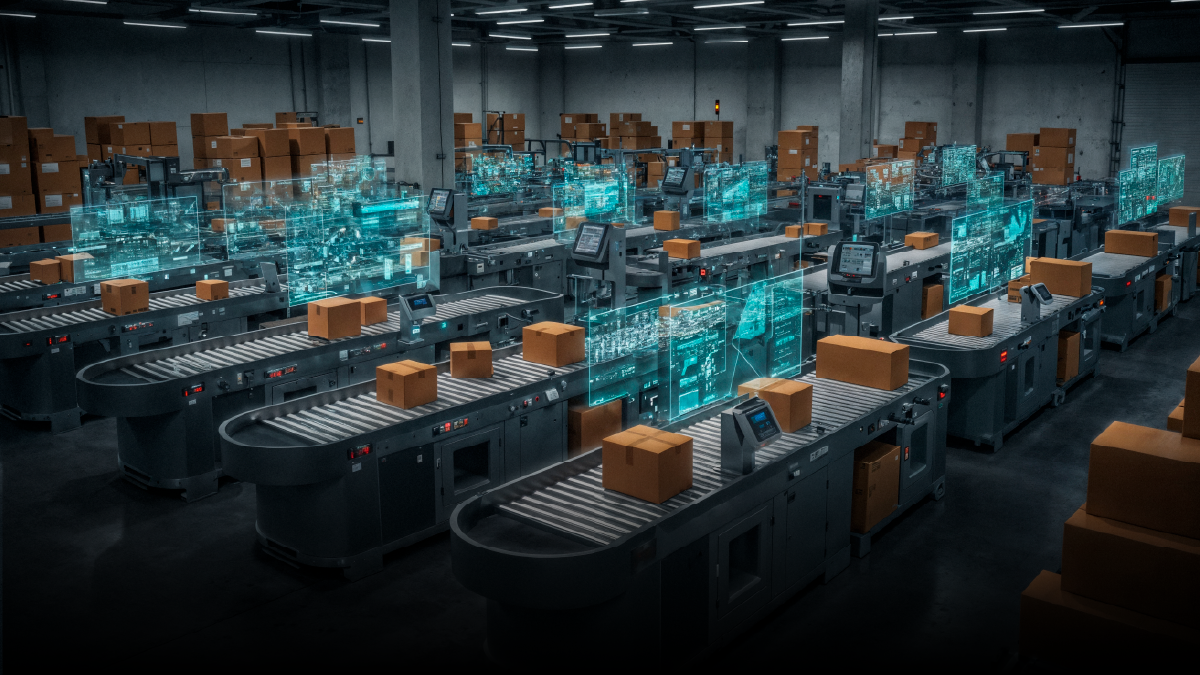
Global logistics has never had a technology problem. It has had a trust problem.
A shipment sort of moves through manufacturers, freight forwarders, customs brokers, ports, carriers, warehouses, insurers, and then buyers. At every handoff there’s another paper trail, another approval layer, and another opening for the details to drift a bit, or more than a bit. By the time a dispute appears, everyone who touched the lane turns up with their own spreadsheet, their own timestamps, and their own version of how it all happened.
That model worked when supply chains were slower and simpler. It struggles when containers move across continents and decisions need to happen in minutes rather than days.
Also Read: What Is a Pharmaceutical Supply Chain and How Is Digital Innovation Improving Drug Delivery in 2026?
Document fraud is one of the biggest pressure points. Bills of lading, certificates of origin, and shipping manifests remain vulnerable to duplication, alteration, and forgery when they exist as isolated files moving between disconnected systems. Tokenized shipping documents change that equation by creating a verifiable digital identity for each document and every change made to it. The result is a chain of custody that is visible, auditable, and significantly harder to manipulate.
Disputes follow a similar pattern. Was the cargo damaged before loading or during transit? Did the shipment arrive late because of the carrier or customs clearance? Who is responsible for the temperature excursion that ruined the cargo?
Arguments survive where evidence disappears.
Oracle states that its Oracle Blockchain Platform is a managed service, kind of built on Hyperledger Fabric for smart contracts and tamper proof distributed ledgers. In practice that means every scan, handoff inspection and status update turns into a permanent timeline which all authorized parties can reach, see. So yea it’s more than just a record, it’s a shared sequence that sticks around.
The logistics industry has spent decades building systems to improve trust between participants. Blockchain tracking takes a different approach altogether. It reduces the need for trust in the first place.
Enterprise Use Cases Already Reshaping Logistics in 2026
Technology becomes interesting when it leaves the conference stage and enters the warehouse floor. That transition is already happening with logistics blockchain tracking, particularly in industries where traceability failures carry financial, regulatory, and sometimes human consequences.
Pharmaceutical supply chains land right at the top of that list. A temperature excursion of just a few degrees can mess up biologics, vaccines and specialty medicines, long before anyone notices the kind of damage done. In the old way, compliance is mostly periodic checks, plus scattered records gathered across a bunch of separate systems. With blockchain, the whole flow shifts from retrospective auditing to continuous verification, kind of like a constant attestation as things move along. IoT temperature sensors can feed readings directly into shared ledgers, creating an immutable compliance history from production facility to hospital shelf.
SAP states that its Traceability Hub supports precise serialization compliance and end-to-end product integrity in life sciences. That capability matters because regulators increasingly expect proof of custody, not promises of compliance.
Food supply chains face a different challenge. When contamination happens, speed starts to matter more than efficiency, honestly. Rather than trying to remember whole product categories, organizations can lean on blockchain-backed provenance logs to sort out the problematic batches and the suppliers, plus the particular shipment routes, with much finer control.
Cross border trade adds yet another pressure point. With digital product passports and ethical sourcing rules that are picking up steam, companies get pushed to show, where the materials first came from and how they traveled, plus whether their sustainability claims stay solid under scrutiny. In this kind of situation logistics, blockchain tracking stops looking like a competitive edge and turns into a compliance duty, kind of hiding in plain sight. It’s less about bragging more about proof, and everyone pretends it’s simple.
Technical Implementation Challenges Standing Between Promise and Scale
The biggest misconception surrounding logistics blockchain tracking is that companies need to tear out decades of technology investments and start from scratch.
That assumption alone has probably delayed more projects than technical limitations ever did.
Most enterprises are not replacing ERP systems, warehouse platforms, transportation management software, or quality systems that took years to build and optimize. The real challenge is making these systems speak a common language without forcing the business into another painful transformation cycle.
This is where middleware becomes the quiet hero of blockchain adoption. Instead of replacing existing infrastructure, middleware layers sit between applications and translate data into formats that blockchain networks can understand. Shipment events generated inside an ERP can flow into a shared ledger while inventory updates from a warehouse management system continue operating exactly as before.
Microsoft’s Supply Chain Traceability add-in reflects this reality by providing API endpoints for ERP, WMS, and QMS integration. The future of logistics blockchain tracking will not be built on replacement. It will be built on interoperability.
Network architecture creates another decision point. Permissioned consortium networks like Hyperledger Fabric, tend to push governance first, plus privacy and a more dependable performance path, among known participants. Public Layer 2 setups usually lean more hard on scalability, and on transaction throughput. Honestly, neither route is like ‘always’ better. What to pick really hinges on regulation, the expected transaction volumes, and those trust requirements that sit across the whole ecosystem.
Then comes the least exciting challenge and arguably the most important one.
Standards.
A blockchain network connecting ten logistics partners becomes far less valuable if every participant labels shipment events differently or follows incompatible data structures. Without shared protocols such as GS1 standards, companies simply replace disconnected databases with disconnected blockchains.
Technology can create trust. Standards are what allow that trust to travel.
The Horizon Where Blockchain, AI, and Autonomous IoT Begin to Converge
The next chapter of logistics will not be built around people checking dashboards. It will be built around machines making decisions faster than humans can review them.
AI agents will negotiate spot freight rates in real time. IoT systems will detect those little disruptions before they turn into actual delays, kind of early. Then routing engines will reshuffle cargo more or less on the fly, depending on weather, traffic congestion, tariffs, or just inventory shortages. And later on, machine-to-machine micropayments might just complete transactions the moment the contractual conditions are satisfied, without much waiting.
None of that works if every participant operates from a different dataset.
Autonomous systems move at machine speed but trust still moves at human speed. That gap is where logistics blockchain tracking becomes critical. The ledger becomes less of a database and more of a shared operating system for global trade.
The companies that treat blockchain as infrastructure rather than innovation theater will be the ones building supply chains resilient enough for the decade ahead.