





3D printing is not a hobby anymore. It is not just for rough models or things you show off on a desk. It is happening on factory floors. Parts are being made, used, and shipped every day. Additive manufacturing is the name for it. It builds things layer by layer from a digital file. That is different from traditional manufacturing, like CNC or milling, where you start with a block of material and cut away everything you do not need.
Now it is more than prototyping. Additive manufacturing is moving into production. Companies are using it for real parts, real products. McKinsey says it is transitioning from prototype-centric work to broader commercial use. They also estimate that by 2025, low-volume, highly customized manufacturing markets could reach around 770 billion dollars annually. It is not small. It is real, and it is changing the way supply chains work. You can make parts when you need them, reduce waste, and create shapes that could not be made before.
Beyond Rapid Prototyping into Direct Digital Manufacturing
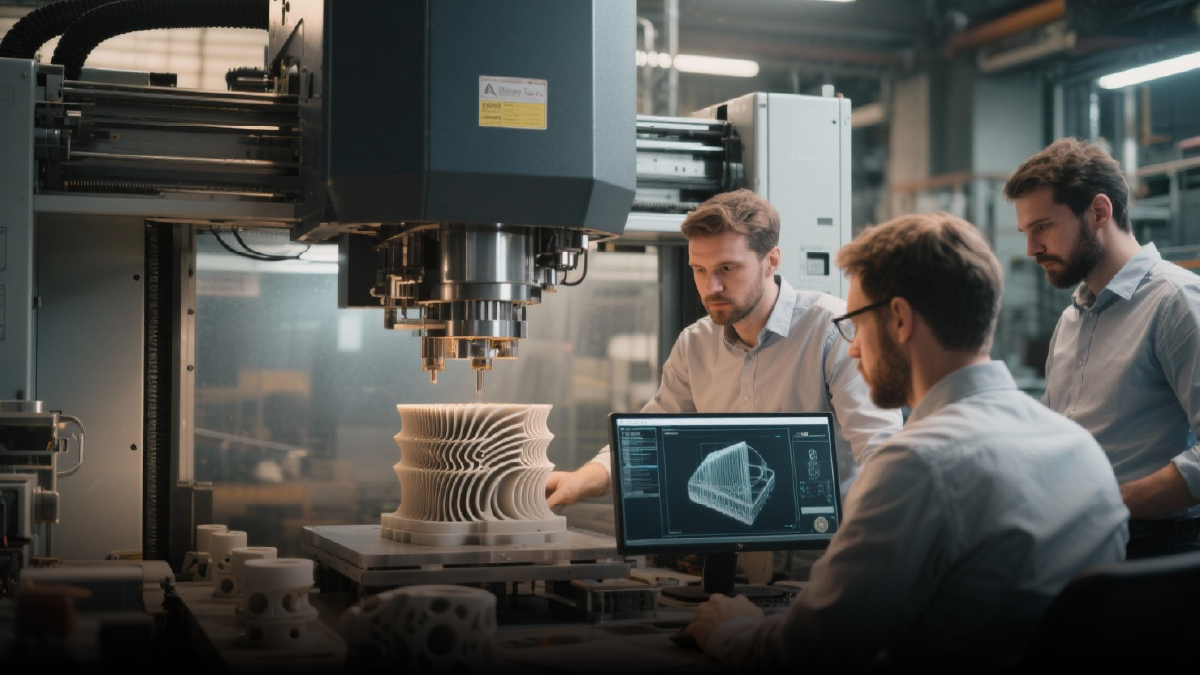

Back in the 1980s and 90s, 3D printing was mostly something people played with. Engineers used it to check shapes, make rough models, or just show clients what they had in mind. It was cool, yes. But it rarely went beyond the lab. It did not make real parts that went into machines. Fast forward to now. Additive manufacturing is different. You can take a CAD file and get a part straight from it. No molds, no special tools. You just print it. This is what people call direct digital manufacturing. It is not about making a model anymore. It is about making something you can actually use.
The materials are different too. It is not just plastics like PLA or ABS. Engineers now print metals like titanium or Inconel. Ceramics that can handle heat. Even conductive inks for electronics. That means shapes that used to be impossible are now possible. Hollow, strong, light. Waste is much lower because you only make what you need.
Additive manufacturing builds layer by layer from a digital file. NIST makes sure there are standards and tests so the parts work consistently. What used to be a hobby or a lab trick is now a real thing. Industries can use it. It works. It is here.
Why Industries Are Switching to Additive Manufacturing
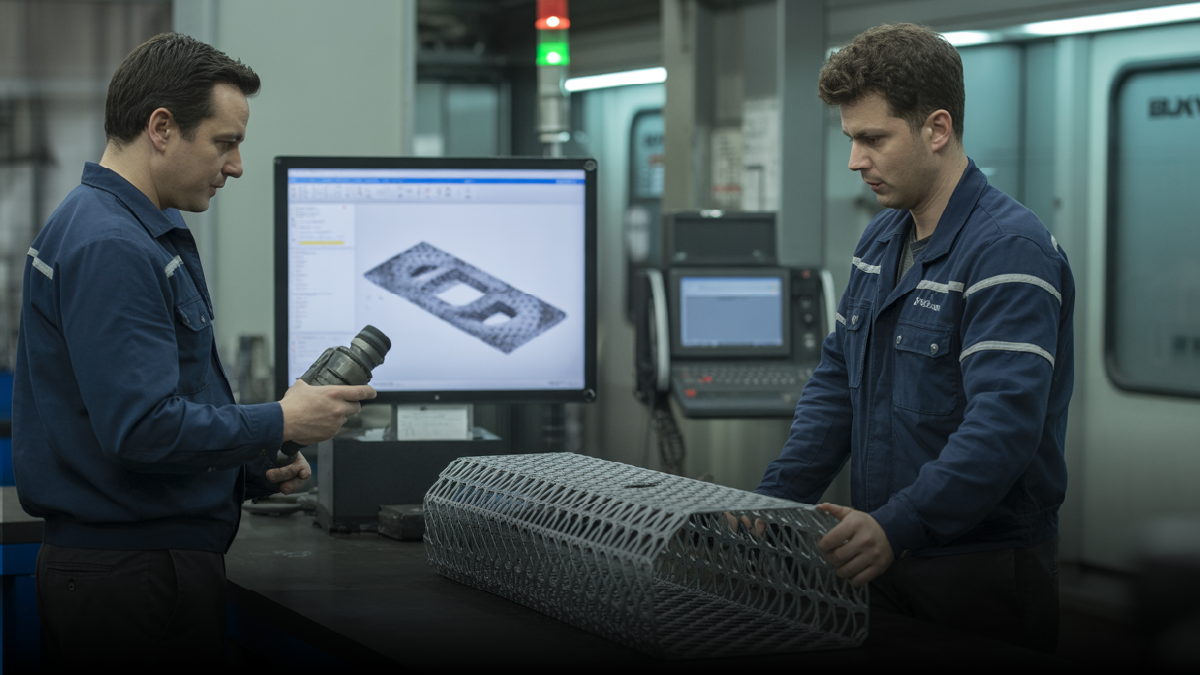
Additive manufacturing is not just a new way to make things. It changes what you can even think about making. First, geometric freedom. With AM you can make shapes that were impossible before. Hollow structures, lattices inside parts, curves that flow organically. They are strong and light at the same time. Engineers call this light weighting. On the Airbus A350, some AM parts cut the weight by around 43 percent compared to parts made the old way. That is huge. Every kilogram matters in airplanes. This is possible because of DfAM, Design for Additive Manufacturing. You have to think differently. You cannot just take a part designed for milling and print it. You have to design for printing. Once you get that, the shapes you can create are almost endless.
Second, material efficiency. Traditional machining is wasteful. You start with a big block of metal, cut away 80 or 90 percent of it, and throw the rest away. People call it buy-to-fly ratio. Additive manufacturing is the opposite. You only put down the material you need. Less waste, less cost. The impact is not just money. It is better for the planet too. You are using less energy, making less scrap, and still getting high-quality parts that meet industry standards.
Also Read: Edge Computing Use Cases: Real-World Examples Driving the 2026 Digital Transformation
Third, supply chain resilience. AM lets companies print parts when and where they need them. You do not need massive warehouses full of inventory. You do not rely on shipping across the world. You can go from digital file to printed part on-site. According to McKinsey this change is colossal. It enables the companies to completely alter their approach from one of just-in-time to one of just-in-case. They will be able to react to interruptions more quickly, have production constantly going, and eventually, cost will be reduced all the way. The parts are available exactly when needed. That is the kind of flexibility traditional manufacturing cannot match.
All three pillars together show why companies are switching. It is about what you can make, how efficiently you make it, and how fast you can get it to the right place. Additive manufacturing is not a gimmick anymore. It is a real tool that changes the rules of production.
Sector-Specific Disruption
Additive manufacturing is not just a new way to make a single part. It is changing how entire industries think about making things. In aerospace and defense, it is huge. Take jet engine fuel nozzles. They used to be twenty different pieces. Each had to be made, then machined, then assembled. Every step could introduce mistakes or delays. With additive manufacturing, you can print it all as one piece. One part. No assembly. Fewer mistakes. Airbus is doing this on planes like the A350. Brackets and other parts are lighter, stronger, and printed as needed. This is not theory. It is flying in real planes today.
In medical and dental fields, the change is just as dramatic. The FDA says more than a hundred additive manufacturing medical devices are cleared. That includes titanium hips and knees that fit individual patients, and surgical guides for precise operations. In dentistry, aligners and custom appliances are printed for each person. That makes things faster, more accurate, and eliminates huge inventories. Hospitals and clinics can deliver patient-specific care without waiting or storing massive parts.
The disruption of electronics and semiconductors is still ongoing. Engineers are now able to print circuits not only on flat boards but also on curved surfaces using 3D printed electronics. PCB enclosures can be prototyped quickly. Sensors can be embedded directly during printing. This changes the way products are designed. Faster iterations. Fewer assembly steps. Devices that were impossible to make before are now possible.
Similar are the stories in all these industries. Aerospace, medical, electronics. The outcome is less weight, increased strength, higher precision, more customization and shorter time to market. The adoption of additive manufacturing is making the businesses to reimagine their limitations. It is not something for the lab anymore. It is happening now. Companies are printing, testing, and rethinking designs. This is the way industries are starting to move. And it is real.
Technical & Economic Challenges
Additive manufacturing is not perfect. It has its limits. One big one is post-processing. You print a part, yes, but often it is not ready right away. You have to remove supports, sand surfaces, sometimes heat-treat it. That takes time and adds cost. It is not just hitting print and done. People forget that.
Production speed is another issue. If you want to make a hundred thousand or more of the same part, additive manufacturing is not the fastest or cheapest way. Injection molding is still quicker for huge volumes. AM shines in low-volume, complex, or custom parts. But for big runs, the old methods still win.
Then there is quality assurance. Each layer is different. Tiny variances can creep in. That makes certifying parts for critical applications, like in airplanes, tricky. Every component has to be checked. It is not easy. Standards help, but the process can be slow and meticulous.
These challenges do not mean additive manufacturing is bad. They just mean it is not a magic bullet. You have to understand where it works best. Where it makes sense. Companies that get this balance right use AM for the right parts and the right volumes. That is how it becomes valuable.
The Smart Factory and AI Driving the Future of Manufacturing
The next step for additive manufacturing is the smart factory. Machines are not just CNC or just 3D printers anymore. They can be combined in one setup. You can print a part, then finish it with CNC without moving it anywhere. That saves time and reduces errors.
AI is also getting into the mix. Sensors watch the part as it prints. If something goes wrong, the machine can catch it in real-time. No need to wait until the end. This is called in-situ monitoring. It means fewer failed parts, less waste, and faster production cycles.
Hybrid manufacturing plus AI is the next frontier. This can enable factories to be quicker in their responses, produce intricate components consistently, and utilize digital formats in a more efficient manner. The Fourth Industrial Revolution is not a future event; it is already taking place and the production technologies are its element.
End Note
Additive manufacturing is not about taking over old manufacturing. It is about helping it. It is about filling gaps, making hard things possible, and making some things faster. It does not work everywhere. It is essential for you to be aware of the areas where it is beneficial and where it is not. The firms that will be successful in the 2020s are those who will come to grips with the concept of additive thinking. They will design not only for the parts that can be made but also for how they should function. They will try, fail, fix, and keep learning. The ones that do this will lead. The rest will be left behind.