



A person behind the wheel can look at the road without much effort. You glance toward an intersection, pick out a cyclist, and then see a car easing off. After that, a choice happens fast, even though there are many lights and cues in the mix.
A self-driving car does not get that for free. It has to figure out what is happening on the road step by step, again and again, while it keeps moving.
That is what autonomous vehicle sensor technology is really about. Sensors collect the basic data a car needs to judge what is around it. Then software takes that data and turns it into a clear view of the scene. Different sensor types each add their own piece. Cameras help with visual context. LiDAR maps surfaces. Radar tracks motion. Ultrasonic sensors handle close range. GNSS gives location. IMUs track movement and tilt.

This shift is not just a research idea anymore. Waymo rolled out six more markets in 2026. It covered 11 major cities across the U.S. It also reached more than 500,000 fully autonomous rides each week. The real issue is now not sensing itself. It is how dependable sensing stays when streets get messy and complex.
How Autonomous Vehicles ‘See’ Through Active and Passive Sensors
Not all sensors see things the same way. This difference matters when an autonomous car drives off a simple road and into a tunnel, a busy downtown area, or rough weather.
Passive sensors work with signals that are already available. Cameras capture light from the environment, while GNSS receives satellite signals to help establish location. An IMU takes a different approach by measuring acceleration and rotational movement. None of these systems needs to send a signal toward an object and wait for a response.
Active sensors make a signal first, then look at what returns. LiDAR shoots out laser pulses and reads the reflected light. Radar works with radio waves. Ultrasonic sensors send fast sound waves, but only across short ranges.
The difference sounds technical, but it has a practical consequence. Every sensing method has situations where it is useful and situations where it becomes less dependable. That is why an autonomous vehicle cannot afford to think in terms of one sensor doing everything.
The 5 Core Types of Autonomous Vehicle Sensors
LiDAR
LiDAR sends quick laser bursts out into the area around it. When the light hits things, the system records how it bounces back. From those returns, it builds a thick set of 3D points. The result shows where nearby objects are and what their surfaces look like.
That spatial detail is one of LiDAR’s biggest strengths. It can help an autonomous system understand where an object is, rather than simply identifying what the camera sees in an image. But LiDAR is not a magic shield against difficult conditions. Interference, environmental effects and other performance factors still matter, which is why it becomes one layer within a larger perception system.
Radar
Radar approaches the road differently. It sends radio waves outward and examines the returning signals to estimate distance and relative movement. Doppler information is particularly useful when the vehicle needs to understand whether another road user is approaching, moving away or changing speed.
The interesting development in radar is now happening deeper inside the system. In a demonstrated NVIDIA setup, five radar units handled about 540 MB/s of raw ADC data, compared with 4.8 MB/s as an equivalent point-cloud output. The system processed the raw data at 30 frames per second, and NVIDIA said centralized processing provided roughly 100 times more available information.
That shift matters because richer radar information gives the perception software more to work with. Radar is no longer simply being treated as a sensor that produces a small stream of detections. Its raw information can become part of a much larger computing and perception pipeline.
Camera Systems
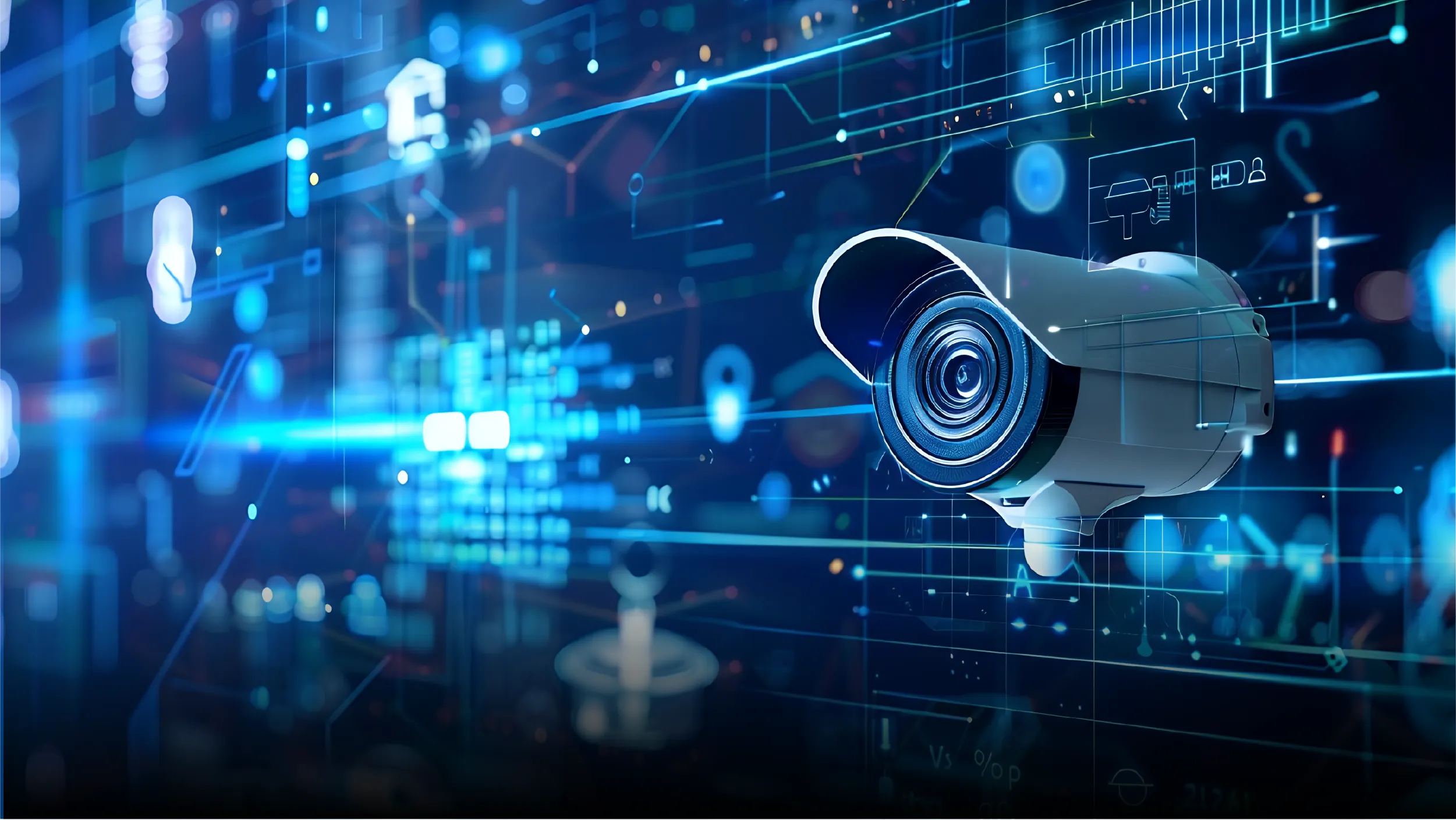
Cameras remain essential because roads contain an enormous amount of visual information. A camera can capture a lane marking, read a road sign, identify a traffic signal or distinguish between different types of road users.
Computer vision processes those images, while stereo vision can help estimate depth by comparing views from different camera positions. Infrared sensing can also add information beyond ordinary visible-light images.
The weakness is equally obvious. A camera depends heavily on what the visual scene looks like. Poor lighting, glare, obstruction and difficult weather can make interpretation harder. That does not make cameras less useful. It explains why autonomous vehicles combine them with sensing methods that approach the same environment differently.
Also Read: How Is Logistics Fleet Electrification Technology Transforming the Future of Sustainable Transportation?
Ultrasonic Sensors
Ultrasonic sensors operate over much shorter distances. They send high-frequency sound waves and use the returning signal to detect nearby objects.
Their usefulness becomes obvious during low-speed maneuvers. When a vehicle is parking or moving close to an obstacle, knowing that something is only a short distance away can matter more than seeing hundreds of meters ahead.
They are therefore a supporting part of autonomous vehicle sensor technology rather than the primary source of long-range perception.
GNSS/GPS and IMUs
Position is another piece of the puzzle. GNSS uses satellite signals to help determine where the vehicle is, while an IMU tracks acceleration and rotational movement.
GNSS does not always work well when the sky view is low. For example, a tunnel or tall buildings can block or weaken the signals. In those moments, the IMU can still sense how the vehicle moves. It keeps tracking the changes while the GNSS data is missing. Once the satellite signal comes back, the system can use the new positioning to update the estimate.
Together, these systems help answer a basic but critical question for an autonomous vehicle. Where exactly am I, and how have I moved from that position?
Sensor Fusion as the ‘Brain’ Behind the ‘Eyes’
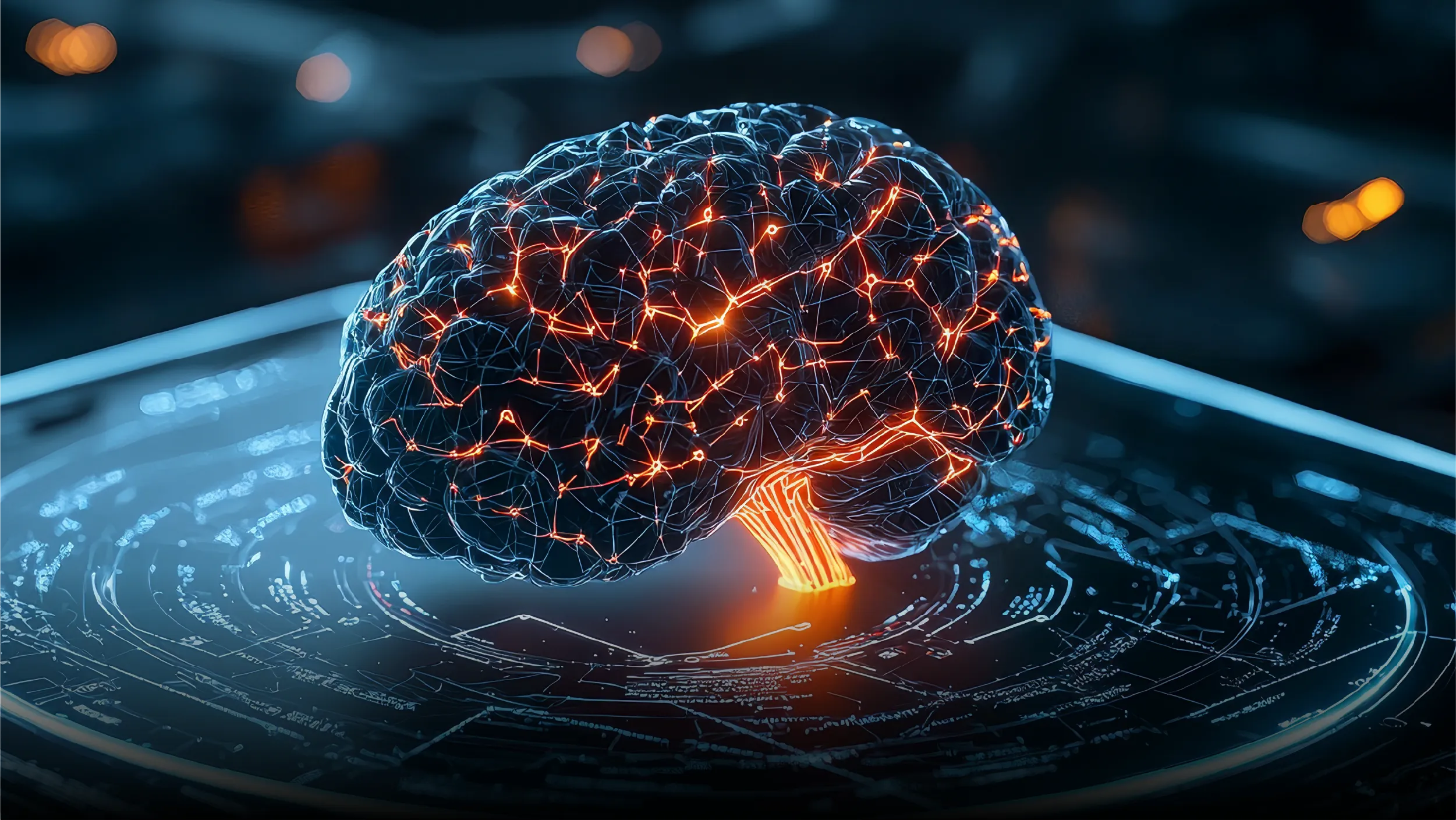
This is where the idea of autonomous vehicle sensor technology becomes much more interesting. A self-driving vehicle does not simply collect five different versions of the same information and choose one.
A camera might tell the system that the object ahead looks like a pedestrian. Radar can add information about that object’s movement. LiDAR can help establish its position in three-dimensional space. Meanwhile, localization systems tell the vehicle where it is in relation to the road.
The challenge is making all of those pieces agree.
If a single sensor becomes unreliable, the vehicle should not suddenly lose its understanding of the environment. That is one reason multi-sensor architectures matter. Different sensing methods can provide overlapping information, giving the perception system another way to interpret what is happening.
ISO 23150-1:2026 defines the logical interface between environmental-perception sensors and a data-fusion unit. The standard describes that fusion unit as generating a surround model and interpreting the scene from sensor data.
That description gets to the heart of sensor fusion. The objective is not to collect data for its own sake. The objective is to turn different streams of raw information into a representation of the surrounding world that downstream systems can actually use.
How Sensors Enable Safer Self-Driving Vehicles
The safety argument around autonomous vehicles is often reduced to one simple idea. Machines can react faster than people. There is some truth in that, but it misses the more important point.
A self-driving system does not just need to react quickly. It needs to keep watching.
A human driver can miss something because of fatigue, distraction or a momentary lapse in attention. An autonomous perception system is designed to keep processing its sensor inputs while the vehicle is moving. That constant observation can help the vehicle maintain awareness of objects and changes around it instead of relying on a driver’s attention being in exactly the right place at exactly the right moment.
Reaction time still matters. The outline for this article compares algorithmic sensor processing in milliseconds with an average human response time of 1 to 1.5 seconds. But the real advantage is not a stopwatch comparison. An autonomous vehicle has to sense, interpret, predict, plan and then act. A faster sensor response is useful only when the rest of that chain can make use of the information.
Prediction makes the distinction even clearer. Suppose a cyclist is moving alongside the vehicle. Detecting the cyclist is only the first step. The system also needs to estimate where that cyclist may move next. Combining visual information with radar data can help the vehicle understand movement and trajectory rather than treating every detected object as stationary.
That is where autonomous vehicle sensor technology can contribute to safer driving. It gives the vehicle a continuous stream of information from which its broader decision-making system can work.
Current Challenges and Future Outlook
The difficult part of autonomous perception is not proving that a sensor can detect something under ideal conditions. The real test comes when conditions change.
LiDAR, for instance, cannot be judged only by how far it can detect an object. ISO’s 2026 automotive LiDAR testing work covers range capability, range precision, anti-interference, ghost points and environmental effects, including ADAS and automated-driving scenarios. That tells us something important about the technology. Reliable perception is a collection of performance requirements, not one impressive specification on a product sheet.
The same thinking is appearing at the system level. On June 24, 2026, UNECE announced approval of the first global framework legally enabling fully autonomous driving systems. The framework includes Safety Management Systems, credible testing, safety-case validation and continuous in-service monitoring.
Meanwhile, technologies such as 4D imaging radar, solid-state LiDAR and V2X communication are pushing the field forward. But better hardware alone will not settle the autonomous-driving question. The real challenge is making the complete sensing and decision system dependable when individual inputs become uncertain.
Conclusion
Autonomous vehicles do not become capable simply by adding more sensors. The difficult engineering work begins after those sensors are installed.
A camera has to make sense of a visual scene. Radar has to provide useful movement information. LiDAR has to produce reliable spatial data. Localization systems have to keep track of the vehicle’s position. Then all of that information has to meet inside a perception and fusion system that can make sense of it quickly enough to support a driving decision.
That is why the future of autonomous vehicle sensor technology will be shaped less by any single breakthrough and more by how well these pieces work together. Better sensors matter. Better processing matters. Better testing matters even more. On a real road, reliability is not about what the system can do on its best day. It is about what it can still understand when conditions stop being ideal.
Frequently Asked Questions
- Which sensor is most important for self-driving cars?
No one sensor can do the whole job for an autonomous car. Cameras, LiDAR, radar, and ultrasonic units each give different kinds of data. A GPS and other positioning tools also help. Because of that, sensor fusion matters a lot.
- Can autonomous vehicle sensors function effectively in heavy rain or snow?
Sensor performance can change with environmental conditions, and different sensing technologies respond differently to those conditions. Autonomous vehicles therefore combine multiple sensor types so the perception system has more than one source of information when a particular sensor becomes less reliable.