




The modern factory floor is changing in a way that is easy to see but harder to understand. A robotic arm moving parts from one station to another is no longer remarkable. It’s what’s now happening round it that really counts. Connecting a machine up with sensors, software, machine vision, and now AI, that’s enables a work to take over what was up to now a pure mechanical act.
The scale of that shift is significant. 542,000 industrial robots were installed globally in 2024, more than double the number installed 10 years earlier. Annual installations also crossed 500,000 for the fourth consecutive year.
That growth raises a more useful question than whether robots are the future. What do manufacturers actually gain from them, and what problems come with putting them into a real factory? The answer is not as simple as higher productivity. Cost, integration, safety, maintenance and people all change when robotics enters the picture.

The Pros of Robotics in Factory Automation
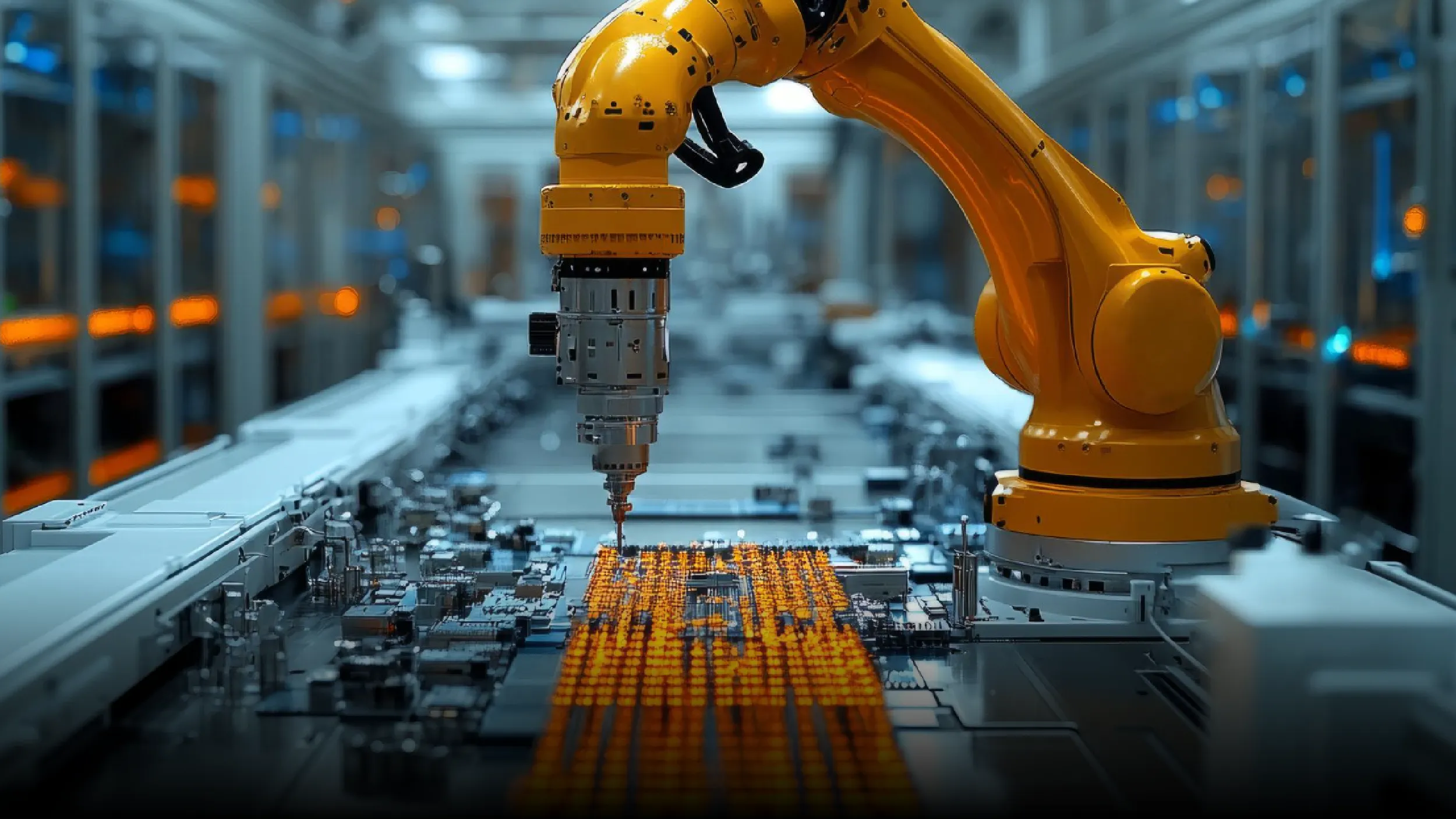
Unmatched Productivity and 24/7 Operations
There is a reason repetitive factory work has been one of the first areas to attract automation. People need breaks. Machines do not. A robot can repeat the same movement through thousands of cycles without becoming tired, distracted or frustrated by the tenth hour of doing exactly what it did during the first.
That can remove bottlenecks from production lines, particularly where one slow manual task holds up everything downstream. It can also make production schedules more predictable because the machine’s performance does not depend on fatigue or shift changes.
There is evidence that the impact can go well beyond simple speed. Saudi Aramco’s Hawiyah NGL Lighthouse site reported a 44% improvement in Overall Equipment Effectiveness, along with a 26% increase in production volumes and a 43% improvement in product quality after deploying more than 50 advanced use cases.
The important point is not that every robot will deliver those results. It won’t. The point is that well-designed automation can improve how the entire production system performs, not merely how quickly one machine moves.
Precision, Consistency and Quality Control
Speed gets most of the attention when companies talk about robots. Precision is arguably more important.
A person performing the same operation repeatedly will naturally introduce some variation. The movement may be slightly different. The pressure may change. Positioning may drift. None of that necessarily matters in a simple task. In high-volume production, however, small variations can accumulate into rework, rejected products and wasted material.
Robots are useful because they are built around repeatability. A programmed movement can be performed again and again with very little deviation. Add machine vision or automated inspection and the system can also identify certain quality problems during production rather than leaving everything for a final inspection.
That creates a more controlled production environment. Instead of depending entirely on a worker noticing that something feels slightly wrong, manufacturers can build checks into the process itself. The result can be less variation, less rework and more consistent output.
Elevated Workplace Safety and Ergonomics
Some factory jobs are simply poor candidates for human involvement. Consider work in areas with excessive heat, hazardous materials, very large or heavy parts or anything that produces or involves sharp edges or machinery with a significant risk. Even where the task itself is safe, repeatedly bending and reaching or twisting, or lifting and dropping, can over time take their toll.
Robotics can move workers away from those conditions.
Collaborative robots, or cobots, take this idea further by allowing certain robotic systems to operate closer to people. Force-limiting features and sensing technologies can help a cobot respond when it encounters unexpected contact. Still, the word ‘collaborative’ should not be mistaken for ‘automatically safe.’ The application, work cell, safeguards and risk assessment still determine whether the setup is appropriate.
The larger opportunity resides with altering what time is used for-the worker who no longer must do physical task-can do a task requiring judgment-like inspection, supervision or maintenance (etc.). That is a much more fruitful way of visualizing the workplace (robot replacement) than simply estimating the number of tasks robot replaces.
Also Read: How Is a Microchip Made? A Step-by-Step Guide to the Microchip Fabrication Process
Long-Term Cost Savings and ROI
The financial case for robotics takes a little patience. Increased volume, reduced waste, lowered labor repetition needs, and more proficient use of skilled workers eventually benefit the manufacturer. However, these come at an expense when the robotic solution is addressing the right problem.
That is where many automation discussions become too simplistic. A robot is not automatically a cost-saving machine. If the underlying process is poorly designed, automation can simply make a bad process run faster.
The strongest ROI usually comes from identifying a costly bottleneck or repetitive activity and then determining whether automation can improve it consistently. Lower unit costs can follow. So can better use of labor. However, the business case should be based on the entire workflow rather than the robot’s purchase price or its headline capabilities.
The Cons of Robotics in Factory Automation
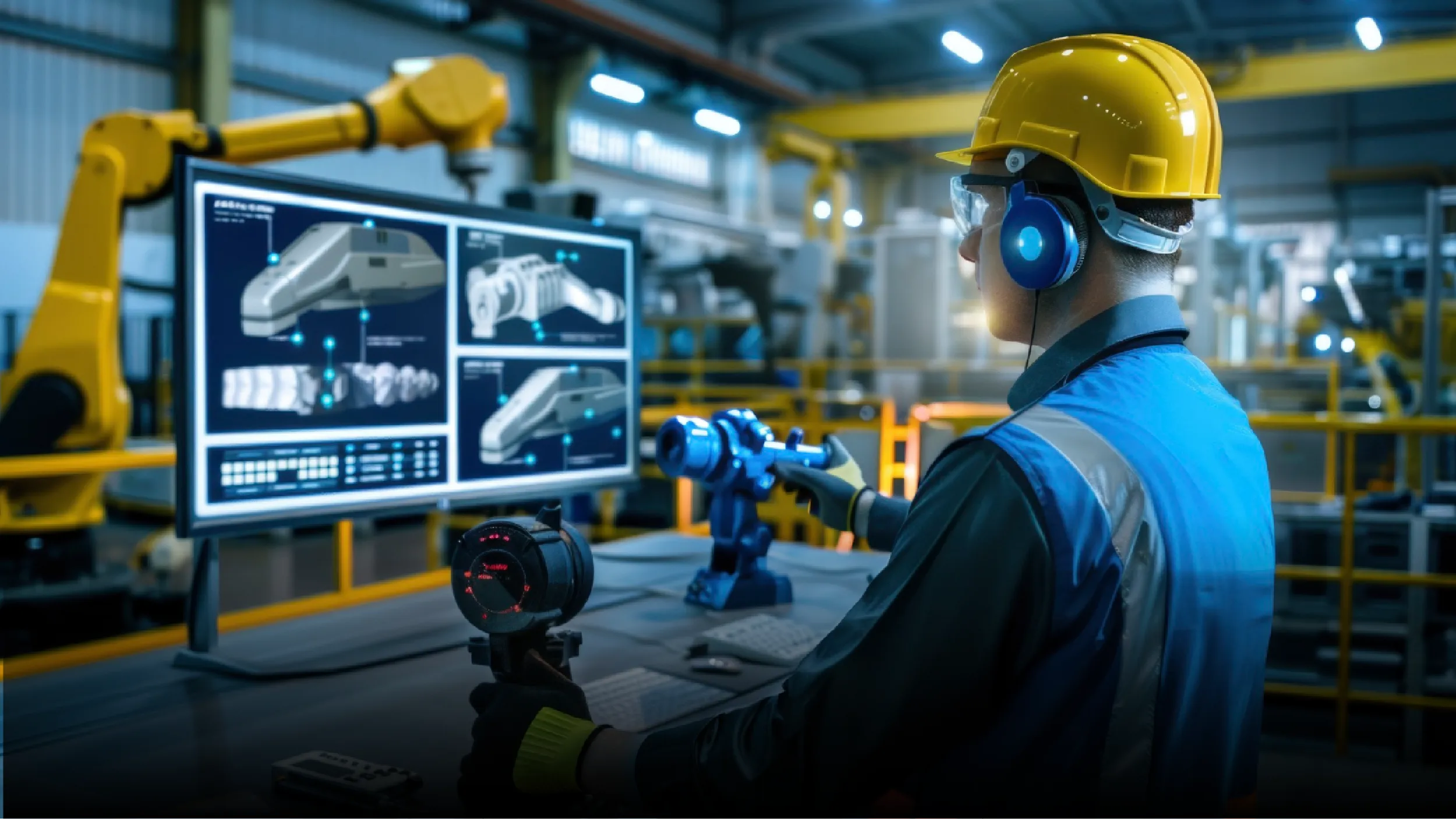
High Upfront Investment and ROI Timelines
The price tag on the robot is often where the conversation starts, and that is exactly where it can go wrong.
A factory needs more than a robotic arm. It may need end-of-arm tooling, sensors, safety guarding, software, installation, testing and changes to the production area. Existing machinery may also need to be modified so the new system can work properly. Those expenses can turn what looked like a straightforward equipment purchase into a much larger capital project.
McKinsey puts the hidden cost into perspective. In large transformation projects, for every $1 spent on buying a robot, about $5 was spent on designing safety systems and the surrounding infrastructure.
That should not be treated as a universal pricing formula. It is a warning against looking at the robot in isolation. A business case that ignores the supporting infrastructure can make the expected ROI look far better on paper than it will be in the factory.
Integration Complexity and Interoperability
A new robot may be modern. The factory around it may not be.
Many production environments contain equipment from different generations and different suppliers. Some machines may communicate easily with modern software. Others may rely on older systems that were never designed for today’s connected factory.
Deloitte identifies data quality, integration and cybersecurity as bottlenecks to wider industrial-robot adoption, with legacy systems and interoperability creating particular difficulties.
That problem is easy to underestimate before implementation. A robot can perform its own task perfectly and still create little value if it cannot receive the right information, send useful data to other systems or fit smoothly into the existing workflow.
In practice, integration is often less glamorous than buying the robot. Yet it can determine whether the automation project works at all. The factory has to function as a system, not as a collection of impressive machines.
Maintenance, Downtime and Cybersecurity Risks
Automation does not remove maintenance. It changes it.
Robotic systems still depend on motors, joints, sensors, controllers, tooling and software. Components wear out. Calibration can drift. A small failure can become a larger production problem when the robot sits in the middle of a tightly connected line. That makes preventive and predictive maintenance important, particularly for operations where downtime carries a high cost.
Then there is the problem that did not exist in quite the same form when factories were less connected.
Modern automation increasingly brings operational technology into closer contact with IT networks. That creates useful visibility and control, but it also expands the digital attack surface. PwC’s 2026 manufacturing cybersecurity outlook points to legacy systems and sprawling vendor networks as contributors to manufacturing cyber risk. It also highlights how the growing connection between OT and IT expands exposure as factories become more connected.
So cybersecurity cannot be bolted on after installation. If a robot is part of the production network, its security becomes part of the factory’s security.
Workforce Reskilling and the Talent Gap
The workforce debate around robotics often gets reduced to one question. Will robots take people’s jobs?
That is too narrow.
The more immediate change is that the factory starts demanding a different mix of skills. What might previously have been one shift on a physical repetitive task, can now be a shift supervising a machine cell, basic programming or monitoring faults and working with production information. At the same time as a manufacturer requires skilled maintenance engineers capable of working on robots and other interfaced equipment.
Finding those skills is not always easy. Nor is building them quickly.
Consequently, reskilling must precede or occur simultaneously to automation. It has to be made clear to employees what changes are being wrought to their jobs and where new value is being produced. Purchasing modern machinery and operating the factory without training the employees does not automate the factory. It has created a dependency on technology that few people know how to manage.
Quick Reference on the Pros and Cons
| Pros of robotics in factory automation | Cons of robotics in factory automation |
| Higher productivity and continuous operation | High upfront investment |
| Reduced production bottlenecks | Additional infrastructure and safety costs |
| Greater precision and repeatability | Complex integration with legacy equipment |
| More consistent quality | Maintenance and potential downtime |
| Reduced exposure to hazardous work | Increased cybersecurity exposure |
| Better allocation of human skills | Workforce reskilling requirements |
| Potential long-term operating savings | Shortage of specialist technical skills |
The benefits of robots within automated factories are most obvious when their function, to remove an obvious problem in the way of operation. The negative points become more difficult to cope with where business executives have an inflated idea of the cost of deployment, complexity of integrating and staff to make the thing run.
How to Successfully Navigate the Transition
The safest way to introduce robotics is not to start with the biggest possible automation project. Start with the problem.
Map the production process and look for the places where time is lost, workers face unnecessary physical strain, quality varies or a bottleneck repeatedly slows the line. Then test whether robotics actually addresses that problem. Sometimes it will. Sometimes another process improvement will make more sense.
A small pilot can reveal far more than a glossy business case. Automating one bottleneck allows a manufacturer to see how tooling, data, maintenance, safety and worker interaction behave in the real environment. If the result holds up, the company can expand from there.
That gradual approach matters because automation is moving deeper into manufacturing. PwC expects the median share of industrial manufacturers with highly automated processes to more than double from 18% to 50% by 2030.
The companies that benefit will not necessarily be those that automate fastest. They will be the ones that understand what should be automated, prepare their systems properly and bring employees into the transition early.
Conclusion
Robotics is neither a miracle cure nor a simple replacement for human labor. It is a trade-off.
A well-chosen robotic system can make production faster, more consistent and safer. It can also create a problem if the manufacturer treats the machine as the entire solution. Infrastructure still has to be built. Systems still have to communicate. Equipment still needs maintenance. Networks still need protection. And people still need to know how to operate the new environment.
That is the real lesson behind the robotics in factory automation pros and cons debate. The question is not whether robots are good or bad. The better question is whether the factory has identified the right task, built the right supporting systems and prepared its people for what comes next.
Autonomous manufacturing will continue to develop. But the winners are unlikely to be the factories with the most machines. They will be the ones that know where machines should stop and human judgment should begin.