





2026 didn’t arrive with some dramatic announcement. No switch flipped. No single policy changed everything. But if you step back and actually look at what’s happening, the shift is obvious. The energy system is quietly being rebuilt, and solar energy is sitting right at the center of it.
For years, solar was treated like a side option. Good for sustainability reports. Good for optics. Not serious enough to carry real demand. That mindset is outdated now. What changed is not just awareness. It is economics and scale hitting at the same time.
Global renewable power capacity is projected to rise by almost 4,600 GW between 2025 and 2030, and solar PV alone accounts for nearly 80% of that expansion, based on data from the International Energy Agency. That is not a small lead. That is one source pulling the rest of the system forward.

Now forget the buzzwords for a second.
Solar energy works in a very straightforward way. Sunlight hits a panel. That energy disturbs electrons inside the material. Those electrons start moving, and that movement becomes electricity. Then an inverter converts that electricity into a usable form for homes and businesses. That’s the entire flow. No complexity needed unless you want to complicate it.
This piece is going to break that down properly. First, how solar energy actually works in real terms. Then why 2026 feels like a tipping point. And then what is actually driving this shift at a level that’s hard to reverse.
How Solar Energy Actually Works
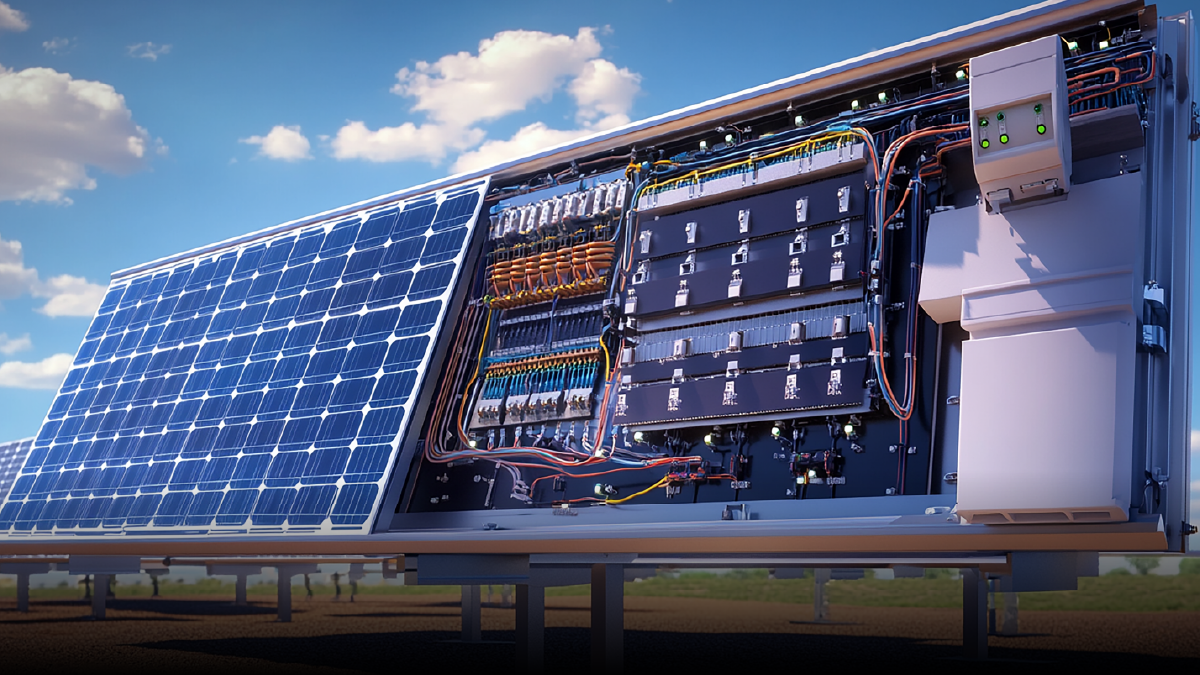
Most explanations of solar energy try too hard to sound technical. That’s where people lose interest. The reality is much simpler if you just follow the flow step by step.
Sunlight serves as the initial point. Sunlight distributes its energy through small particles which scientists identify as photons. The solar panel surface reacts to incoming photons which bring energy that enters the panel’s internal components. Most panels use silicon because it allows scientists to operate their devices through energy application which results in electron movement.
So sunlight hits the panel, and electrons inside the silicon get pushed out of their normal position. They don’t just float around randomly though. The panel is designed in a way that forces these electrons to move in a specific direction. That controlled movement creates an electric current. This is what people call the photovoltaic effect. It sounds heavy, but all it really means is light creating electricity.
Also Read: What Is Supply Chain Visibility and Why Is It Critical for Business Resilience in 2026?
At this stage, the electricity that gets generated is direct current. The issue is that homes and appliances don’t run on direct current. They run on alternating current. So the system needs a way to convert it. That’s where the inverter comes in. It takes the direct current and converts it into alternating current so it can actually be used.
That’s the basic loop. Sunlight to electrons. Electrons to current. Current to usable power.
Now when you zoom out to large-scale systems, the approach can shift a bit. Some projects use concentrated solar power. The system uses mirrors to direct sunlight because it does not generate electricity through direct methods. The system generates electricity through steam production which results from the heat that the process generates. The storage capacity of heat presents an intriguing aspect of this situation. The system can produce energy during periods without sunlight because it possesses stored energy.
So whether it is a small rooftop system or a massive solar farm, the idea stays the same. Capture energy from sunlight and convert it into something usable. The difference is just in how efficiently and at what scale it is done.
Why 2026 Changed the Game
A lot of conversations around solar energy lean heavily on climate narratives. That’s fine, but it’s not the real reason this is accelerating. The real driver is much more straightforward. Solar became cheaper.
Once that happened, everything else followed.
Utility-scale solar PV is now the least costly option for new electricity generation in a significant majority of countries worldwide, based on findings from the International Energy Agency. That single shift changes how decisions are made. Energy systems are not built on good intentions. They are built on cost.
When the cheapest option is also clean, the decision stops being complicated.
This ties directly into what people call grid parity. For years, solar energy struggled to compete with coal and gas. That gap has closed in most regions. In many places, solar is already cheaper. So when new capacity is planned, the decision becomes obvious. Build what costs less.
But cost alone does not explain the speed of this shift. Scale does.
Solar PV capacity is expected to exceed natural gas by 2026 and coal by 2027, with total capacity set to almost triple, growing by around 1,500 GW, again highlighted by the International Energy Agency. That is not just expansion. That is a system starting to replace what came before it.
There is also a geopolitical layer that cannot be ignored. The events between 2024 and 2025 forced countries to rethink energy dependence. Relying on imported fuel started to look risky. Solar energy offers a different model. It is local, widely available, and not exposed to the same kind of disruptions.
So when cost drops, scale increases, and energy security becomes a priority, the shift stops being optional. It becomes inevitable. That is why 2026 feels different. Not because something new appeared, but because everything aligned at the same time.
Where Technology Is Pushing Solar Next
Solar energy didn’t get here without fixing its obvious weaknesses. The biggest one has always been consistency. The sun doesn’t shine all the time. That’s a real limitation. But it is being addressed in practical ways.
Solar plus storage is the first big shift. Batteries now allow excess energy generated during the day to be stored and used later. This changes how solar fits into the system. It reduces reliance on the grid and makes supply more stable. The inconsistency argument doesn’t disappear completely, but it loses its weight.
Land use has been another concern. Large solar farms need extensive land area which creates conflicts with both agricultural operations and expanding urban development. The solution to this issue is found through the implementation of agrivoltaics and floating solar systems. Agrivoltaics enables panel installation which maintains operational function for below-ground agricultural activities. Floating solar systems utilize water bodies as their operational base instead of requiring land space. The two methods provide a partial solution because they decrease operational pressure but do not completely resolve the issue.
There is also a quieter shift happening in the background. Software has reached equal importance to hardware in modern technology. Artificial intelligence is used to predict solar output and manage grid loads and optimize distribution. Google develops tools which assess solar potential through geospatial data to enhance deployment decisions.
So solar energy is not just scaling. It is becoming more efficient, more flexible, and more integrated into the broader energy system.
The Global Push Behind Solar Growth
Technology explains how solar works. Demand explains why it is scaling this fast.
Right now, demand is coming from multiple directions at the same time.
Utility-scale projects are expanding because they deliver large amounts of power at lower costs. That’s straightforward. But at the same time, rooftop solar is growing because it gives control to individuals and businesses. Lower bills, backup during outages, and less dependence on the grid. These are practical benefits, not abstract ones.
Then there is the corporate side. Companies are no longer waiting for governments to lead. They are actively securing renewable energy for their own operations. Google has signed over 170 agreements for more than 22 GW of clean energy and invested over $3.7 billion in clean energy projects. That is not about branding. It is about long-term cost control and meeting sustainability commitments.
Decarbonization has also become more structured. Targets are now tied to timelines and reporting standards. 2026 sits within many of these timelines, which creates pressure to act now instead of later.
Solar energy fits into this environment because it is scalable and measurable. It allows both governments and corporations to show progress in a way that can be tracked and reported.
The Problems That Still Exist
It would be easy to present solar energy as a perfect solution. It isn’t. There are real challenges, and they matter.
According to the International Energy Agency, grid integration, supply chain vulnerabilities, and financing are emerging as key concerns. These are not minor issues. They directly affect how fast solar can scale.
Supply chains are concentrated in specific regions. That creates risk if demand keeps rising and production cannot keep up or gets disrupted. Diversifying manufacturing will become important.
Grid infrastructure is another bottleneck. Many existing grids were not designed for decentralized energy sources like solar. Upgrading them takes time and investment. Without those upgrades, expansion slows down.
The question arises about what occurs after a panel reaches its last operational stage. Solar panels typically last 20 to 25 years. They require replacement after this period. As recycling systems continue their development, the upcoming challenge will increase in severity because more panels will approach their final operational stage.
These challenges do not cancel out the progress. They just define what needs to be solved next.
A Sun Powered Future That Is Already Taking Shape
The conversation has already moved on. It is no longer about whether solar energy can play a major role. That part is happening in real time.
The real question now is speed. How fast can this transition scale? How quickly can systems adapt to support it.
Solar energy brings together cost efficiency, scalability, and energy security in a way that is hard to match. That is why it is moving to the center of the global energy system.
For businesses and individuals, this is not something to watch from a distance. It is something to evaluate now. Whether it is rooftop installations or long-term procurement strategies, the shift is already in motion.
This is not about predicting the future. It is about recognizing that the change is already happening and deciding how quickly to respond to it.