





It is 2026. You wake up like any other day. No alarms. No panic. Just routine. While you are brushing your teeth, a wearable on your wrist notices something small. Too small for you to feel. A rhythm that looks slightly off. Nothing dramatic. But different enough.
You do not feel sick. You do not rush anywhere. Still, your doctor already knows. The system flags it. Someone checks it. Action happens early. That emergency you never felt never arrives.
A few years ago, wearables were mostly about fitness. Steps. Sleep scores. Motivation. Useful, but shallow. Today, they act like medical tools. They track vital signals. They notice patterns. They support decisions that actually matter.

Wearable technology in patient monitoring is no longer passive. It does not just collect data and sit quietly. It works with AI. It pushes care forward instead of waiting for symptoms.
This article looks at how this shift changes chronic disease care, how AI makes sense of constant data, and how remote monitoring reshapes clinical work. It also fits a bigger picture. The World Health Organization’s Global Strategy on Digital Health points clearly toward stronger, more equitable health systems built on digital tools like wearables. This is not hype. It is direction.
The Era of Clinical-Grade Wearables

Not long ago, wearables were politely dismissed as step counters with good marketing. Helpful, maybe. Clinical, not really. That line is gone now.
By 2026, wearable technology in patient monitoring has crossed into serious medical territory. Sensors that once tracked workouts are now cleared for clinical use, measuring ECG signals, glucose levels, and blood pressure with a level of reliability doctors can actually trust. This shift matters. Because accuracy is the difference between a nice dashboard and a medical decision.
As a result, wearables are no longer just watching the body. They are interpreting it. ECG sensors catch irregular rhythms early. Continuous glucose monitors track trends instead of snapshots. Blood pressure monitoring moves from occasional cuffs to daily context. Meanwhile, consumers are not sitting this out. According to PwC’s Voice of the Consumer 2025, 70 percent of people already use at least one healthcare app or wearable. Many use more than one. That alone explains why healthcare systems are paying attention.
However, accuracy is only half the story. The real leap happens when data moves. Modern wearables now connect directly to Electronic Health Records. That means no spreadsheets, no manual uploads, and no guessing during appointments. Platforms like Google’s Health Connect support more than 50 standardized health data types across vitals, nutrition, and activity. In other words, the data finally speaks the same language.
So what does this look like in practice? Smart patches track vital signs around the clock. Next-generation smartwatches analyze biomarkers, not just motion. Implantable quietly communicate with external wearables, filling in gaps humans cannot sense.
The takeaway is simple. Wearables have stopped being accessories. They have become clinical instruments. And healthcare is adjusting, fast.
Revolutionizing Chronic Disease Management
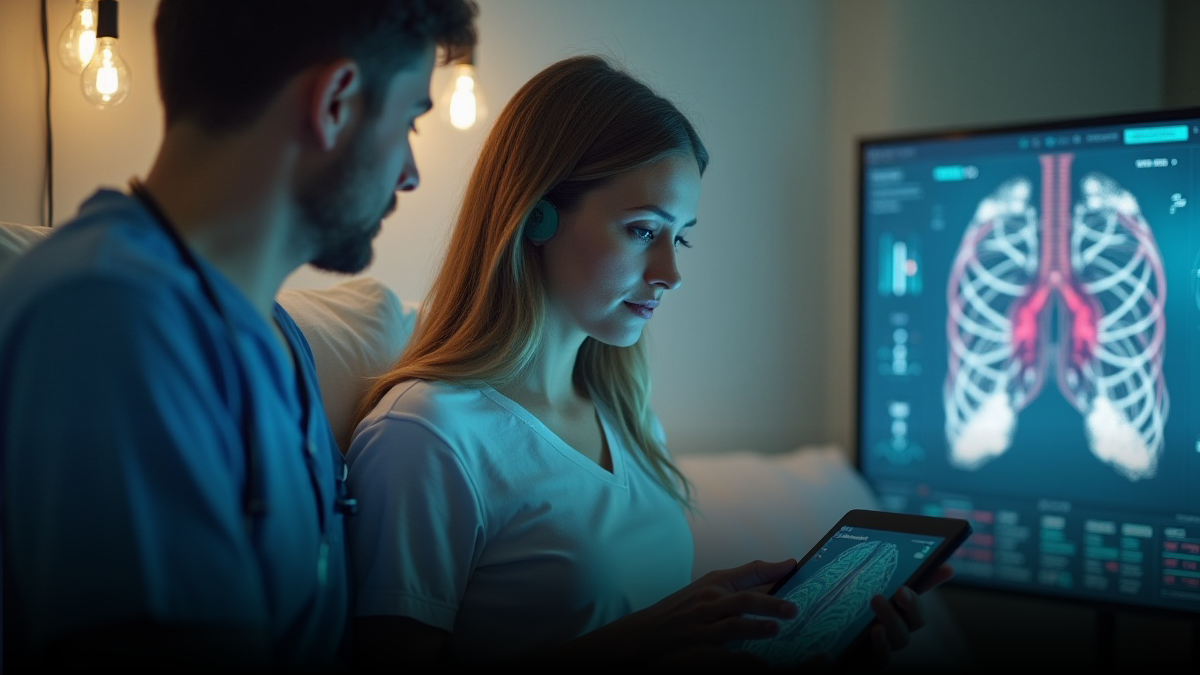
Chronic care used to be slow. Too slow. You wait for symptoms. Then you wait for an appointment. Then you wait again for changes to show up. By the time something looks wrong, it usually already is.
That model is breaking.
The shift now is toward always-on care. Not once every three months. Not only when something feels off. Care runs quietly in the background, every day. Wearables track what the body is doing when no one is watching. Doctors stop guessing. Patients stop filling gaps from memory. This is where wearable technology in patient monitoring actually earns its place.
Start with the heart. Atrial Fibrillation does not come with a warning label. Many people do not feel it at all. Wearables can now spot irregular rhythms as they happen. Not later. Not during a clinic visit. In real time. That matters because early alerts create time. Time to act. Time to prevent a stroke instead of explaining one.
Diabetes is another turning point. Finger checks give snapshots. Life does not run on snapshots. Wearables track glucose continuously and feed that data into insulin pumps. Dosing adjusts automatically. No panic corrections. No late-night guesswork. The system responds while the patient lives their life.
Also Read: Additive Manufacturing: How Next-Gen 3D Printing Is Revolutionising Industry in the 2020s
Respiratory care follows the same logic. COPD and asthma flare-ups rarely come out of nowhere. Oxygen levels dip. Breathing patterns shift. Wearables catch these early signals. Treatment can change before an emergency room visit becomes the only option.
This is not speculation. Apple’s Health Study, launched through the official Research app, now includes more than 350,000 participants. That is real people, real data, real conditions. It shows how wearable signals reflect health patterns at scale, not just in labs.
And behavior changes when visibility improves. PwC reports that 90 percent of users say wearable technology has influenced their daily habits. More telling, 34 percent report making significant changes. When people see their data every day, denial gets harder. Adherence improves. Small choices start to add up.
Chronic disease management is no longer about waiting for problems. It is about staying ahead of them. Quietly. Consistently. Every day.
AI and Predictive Analytics
Collecting data is easy. Interpreting it is the hard part. A heart rate every second means nothing on its own. Ten thousand data points a day only help if someone or something knows what to ignore.
Monitoring without intelligence in 2026 would be termed as noise only. The wearables have now come to the point of using edge AI which means that the processing of data is done near the body and not through the cloud far away. This is significant since the human body is quite a mess. All these factors- movement, stress, sleep, caffeine, emotions- greatly affect the raw data and also cause many false alarms to occur. Edge AI filters that out before it ever becomes a problem. Only meaningful changes make it through.
So instead of flooding systems with alerts, wearables flag patterns. A slow rise in resting heart rate over days. A subtle drop in oxygen levels during sleep. A shift in heart rate variability that does not look dramatic in a single moment but looks very different over time. Monitoring becomes interpretation. That is the upgrade.
Reactive healthcare waits for something to happen. Predictive healthcare watches for what usually comes before. Wearables now analyze trend deviations rather than single spikes. This allows systems to spot early warning signs of events like heart attacks or strokes hours or even days ahead. Not because one number crossed a line, but because the pattern no longer looks like you.
This is uncomfortable for some people. It feels like the device knows too much. But that discomfort is often the point. Prediction creates a chance to intervene early instead of responding late.
Doctors do not need more alerts. They are already drowning in them. AI solves this by summarizing wearable data into signals that matter. Instead of scrolling through graphs, clinicians see risk scores, trend summaries, and clear explanations of why a patient is flagged. Low risk fades into the background. High risk moves to the top.
This reduces alert fatigue and decision fatigue. Time is spent where it matters most. With the patients who actually need attention now.
AI is not replacing clinical judgment. It is protecting it. By removing noise. By surfacing meaning. By turning continuous data into something a human can act on.
The wrist collects the data. The brain makes sense of it. And healthcare finally starts to move before things break, not after.
Remote Clinician Insights & The Virtual Ward
It was never the intention of hospitals to serve as long-term houses. Still, for many years, the process of healing was tied to being in the hospital, confined within walls, connected to medical devices, and subjected to occasional examinations by the staff. That model is quietly fading.
Wearables are what make the virtual ward possible. Patients can now recover at home while their vitals are tracked continuously. Heart rate, oxygen levels, movement, sleep. All of it flows back to care teams without the patient doing anything extra. From the clinician’s side, the view is clear. They see trends, not guesses. Recovery does not pause just because the patient left the building.
This hospital-at-home model changes the experience on both ends. Patients heal in familiar spaces. Stress drops. Sleep improves. Meanwhile, clinicians monitor dozens of patients remotely with the same confidence they once had only inside a ward. If something shifts, they know early. If everything looks stable, they do not intervene unnecessarily.
Telehealth also grows up in this setup. Video calls in 2026 are not just conversations. Doctors see live vitals on the screen while they talk. They can ask a patient to stand, breathe, or walk and watch the data respond in real time. The appointment becomes dynamic instead of descriptive. Less explaining. More observing.
What matters most is what technology removes. Fewer forms. Fewer manual updates. Less time chasing data. That space gives doctors something back they have been losing for years. Attention.
This is not about replacing human care. It is about amplifying it. When clinicians are freed from administrative noise, they listen better. They decide faster. They show up more fully.
The virtual ward does not make healthcare colder. It makes it more present. Even when the patient is at home.
Privacy, Security, and Ethics
Let us be honest. This is where people get uncomfortable. A device on your body watching your heart, your sleep, your breathing. The first question is not about accuracy. It is about trust. Who owns this data really? The patient. The hospital. Or the company that built the device.
That fear is valid. Health data is personal in a way few things are. In 2026, the expectation is clear. The patient owns the data. Providers access it for care. Technology platforms are custodians, not owners. When that line blurs, trust breaks fast.
Security plays a big role here. Wearable health data is now protected using advanced encryption standards, often combined with decentralized or blockchain-style architectures. The goal is simple. Data stays locked. Access is logged. Breaches are not quietly ignored.
Then comes equity. If wearable technology in patient monitoring only works for people who can afford it, the system fails. Access matters. Coverage matters. Design matters. Healthcare innovation should close gaps, not widen them.
Trust is not built by promises. It is built by transparency, protection, and fairness. Without that, no technology earns a place in care.
A Healthier Tomorrow
This is what the future looks like when it actually works. Chronic care becomes continuous, not occasional. AI stops being a buzzword and starts making sense of messy human data. Recovery moves home without losing clinical oversight.
Wearables sit quietly in the background, doing their job while life goes on. Doctors see patterns instead of paperwork. Patients understand their bodies instead of fearing them. That balance changes outcomes.
In 2026, wearable technology in patient monitoring is no longer a novelty or an add-on. It is becoming the baseline for how care is delivered.
If you are a healthcare provider, it is time to audit your remote patient monitoring setup and see where it falls short. If you are a patient, ask your doctor which wearable devices actually integrate with your care. The future is already here. The only question is whether you are using it.