



This week’s developments highlight how technology is reshaping industries beyond conventional digital transformation. Financial services are extending AI into client documentation, automotive companies are advancing autonomous vehicle integration, and logistics providers are expanding freight networks. Meanwhile, semiconductor manufacturers are strengthening industrial connectivity as chip production becomes more complex. Together, these developments reveal a broader shift towards intelligent, connected and resilient industrial operations.
Three Developments Worth Watching
- Wealthbox expands AI into client documents: Bringing document intelligence into financial CRM systems could change how advisors manage information, compliance and client relationships.
- Stoneridge and Kodiak AI advance autonomous trucking: Integrating digital vision systems into autonomous vehicles could improve safety and vehicle efficiency.
- Norfolk Southern and Schneider expand intermodal capacity: Combining rail infrastructure with logistics capabilities could strengthen domestic freight connectivity across the eastern United States.
These developments stand out because they address practical industry constraints, from managing sensitive financial information to improving transportation efficiency and expanding manufacturing capabilities.
4 Industry News Stories
1. Wealthbox Launches Vault and Expands AI to Client Documents
Wealthbox has introduced Vault, offering financial advisory firms unlimited file storage, full-content search, version history and compliance monitoring. Its AI can now read documents stored alongside client records, helping advisors retrieve information and propose updates.

The development moves financial CRM systems closer to becoming unified client information environments. Advisors often manage client records and supporting documents across separate platforms, creating information gaps and additional administrative work. Connecting document intelligence with CRM data could improve research, retrieval and everyday decision-making. However, financial information requires strict access controls and auditability. Wealthbox’s permission-aware AI and document history address an important part of that challenge. The larger opportunity is making AI useful in regulated financial workflows without weakening accountability.
2. Stoneridge and Kodiak AI Partner to Advance Autonomous Vehicles
Stoneridge and Kodiak AI are collaborating to integrate MirrorEye camera-monitoring technology into trucks equipped with Kodiak Driver, with plans to explore additional vehicle technology integration.
The partnership addresses an important engineering challenge in autonomous trucking: combining vehicle hardware, visibility systems and driving intelligence into a reliable platform. MirrorEye replaces conventional mirrors with cameras and in-cab displays, while an existing US regulatory exemption allows eligible trucks to operate without traditional rear-view mirrors. This could enable smaller, lighter and more aerodynamic SensorPods. Beyond hardware efficiency, the collaboration highlights how autonomous mobility will depend on partnerships across specialized automotive suppliers. Scaling driverless trucking requires integrated systems that can meet demanding safety and operational requirements.
3. Norfolk Southern and Schneider Expand Domestic Intermodal Capacity
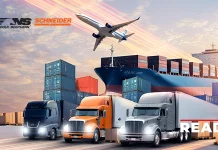
Norfolk Southern and Schneider have entered a strategic agreement combining Schneider’s intermodal assets and logistics expertise with Norfolk Southern’s eastern US rail network and infrastructure investments.
The partnership could improve freight connectivity, expand access to key markets and give shippers more flexibility when moving goods. Its significance extends beyond adding transportation capacity. Combining rail infrastructure with company-owned containers, chassis and drayage operations can help make intermodal services more dependable and attractive to businesses traditionally reliant on trucking. As freight demand and operating costs evolve, logistics providers will need more flexible transportation options. The real test will be whether the partnership improves service consistency, terminal efficiency and customers’ ability to shift suitable shipments from road to rail.
4. Microchip Adds EtherCAT and TSN Networking to Its PolarFire FPGA Platform
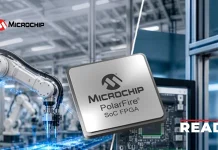
Microchip Technology has added EtherCAT and Time-Sensitive Networking capabilities to its PolarFire FPGA and SoC platforms, expanding support for deterministic industrial networking and edge applications.
The development addresses growing demand for predictable communication between industrial machines, robotics and connected equipment. As AI moves closer to factory operations, delays or inconsistent data transmission can affect automation and control systems. EtherCAT and TSN support could help developers build responsive networks while benefiting from PolarFire’s power-efficient architecture and integrated security features. This matters particularly for industrial robotics, autonomous mobile robots and factory automation. The broader opportunity is enabling more intelligence at the industrial edge without compromising reliability, timing precision or energy efficiency.
ReadMagazine Featured Article
What Are the Top Semiconductor Manufacturing Trends in 2026 and How Are They Shaping the Future of Chip Production?
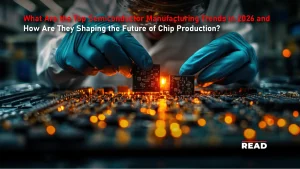 Semiconductor manufacturing is moving beyond transistor miniaturization. The article explores advanced process nodes, High-NA EUV, chiplet packaging, AI-assisted design, digital twins and smart fabs. It also examines power efficiency, sustainable production and supply-chain resilience, arguing that future gains will depend on system-level integration across chip architecture, manufacturing, and infrastructure.
ReadMagazine Weekly Observations
This week’s developments reveal a common industrial priority: connecting fragmented systems to improve operational performance. Financial advisors need unified information, autonomous vehicles require integrated hardware, logistics providers need stronger network coordination, and industrial manufacturers depend on reliable connectivity. The bigger shift is towards technology that solves physical and operational constraints rather than simply adding digital capabilities. Partnerships will accelerate this transition, but execution will determine their value.
Looking ahead to next week, which sector will demonstrate the strongest progress in translating connected technologies into measurable operational gains: automotive, logistics, financial services or semiconductor manufacturing?